Is VANKYO Worth Buying? Smart Projectors, Brightness, Returns and Warranty Explained
VANKYO builds smart projectors with the streaming apps built in, from a Roku TV portable to a 4K ultra short throw laser. This guide covers the four models the storefront lists with the strongest published evidence, explains the brightness-unit traps its own pages set, and reports the contiguous-US shipping, 30-day returns and one-year warranty as the policies print them.
VANKYO sells smart projectors with the streaming apps built in. This guide covers the four models the storefront lists across its Performance and Vista lines, from a Roku TV portable to an ultra short throw laser, and it reports the numbers the maker publishes, including the ones its own pages disagree about. (The third line, Leisure, is excluded; the section below gives the reasons. One note before anything else: the H500R showed sold-out markers on the storefront when this guide was researched, so availability is never stated here.)
Everything here is manufacturer-published specification plus VANKYO's own purchase policies, read from ivankyo.com's product and policy pages. We do not test projectors and we claim no measurement of our own; where an independent number does not exist, this guide says so.
What VANKYO sells, and what this guide covers
VANKYO has sold projectors since 2017. Its storefront currently lists twelve projectors and five accessories. This guide covers the four models with the strongest published evidence and distinct jobs: the Performance H500R (Roku TV), the Performance V700G (Google TV), the Performance V700G Pro (Google TV, brighter, 120" screen included), and the Vista T4 (4K ultra short throw laser).
Three models are deliberately left out, and the reasons matter as much as the picks. The V700 Neo is a near-duplicate of the V700G: both print 400 ANSI lumens, 1080p, the same 251x178x95 mm body at 2.02 kg, and the same five-item package list; their spec sheets differ on paper (the Neo's lists a 20,000-hour light-source life and a warranty row the V700G's omits, the V700G's lists 4K input support and obstacle avoidance the Neo's omits), so we cannot verify the hardware is identical, and we will not pretend otherwise. The Leisure 570B prints 200 ANSI lumens, half the V700G's 400, and costs more on the storefront at the time prices were recorded in our research ledger. The Leisure 3W Flip is the lowest-priced projector on the site, but its spec page prints a bare "Lumens: 150" with no measurement standard named, while the four covered models all print ANSI figures, so its number is not comparable as printed.
The brightness numbers, explained
Brightness is the number this category argues about, and VANKYO's own pages show why. ANSI lumens are the standard you want quoted: a figure measured by the ANSI method. The H500R lists 330 ANSI lumens, the V700G and the V700 Neo both list 400 ANSI lumens, the V700G Pro lists 730 ANSI lumens, and the Vista T4 lists 1,800 ANSI lumens typical.
The Vista T4's own page then disagrees with itself. Its description claims "outstanding 2100 ANSI lumens" in two places, while its specification table prints 1,800 ANSI (typical), 1,650 ANSI (minimum) and 2,000 ANSI (boost mode, minimum). Both sets are the maker's own words, so this guide reports the conflict instead of picking the friendlier number: the safe reading is that 1,800 typical is what the table commits to, and 2,100 is the marketing headline.
And the Leisure 3W Flip's page drops the ANSI qualifier entirely, printing only "Lumens: 150". A bare lumen figure is a different measurement than an ANSI figure; comparing 150 against the lineup's ANSI numbers would be comparing two different scales. That is one reason it is not covered as a pick here.
No independent measurement of any of these four models exists that we could find: the ProjectorCentral database pages carry the maker's own figures (the T4's entry reprints 2,100 ANSI, its marketing number, verbatim) with no named reviewer. Read every brightness figure here as the manufacturer's claim, with its conditions.
VANKYO Performance H500R: the Roku TV pick
The H500R is the only Roku TV model in the lineup with a complete published spec sheet, and the lowest-priced of the four models covered here at the time of research. VANKYO's spec table lists native 1920x1080 at 330 ANSI lumens, a sealed optical engine, auto focus with auto keystone, dual-band Wi-Fi, and dual 5W speakers with Dolby Audio; its marketing bullet adds Bluetooth 5.2, which the spec table does not version. Ports are one HDMI 1.4, one USB 2.0, one audio out. The trade-off is availability: both of its variants, "H500R Only" and "H500R + Carrying Bag", showed sold-out markers on the storefront when this guide was researched.
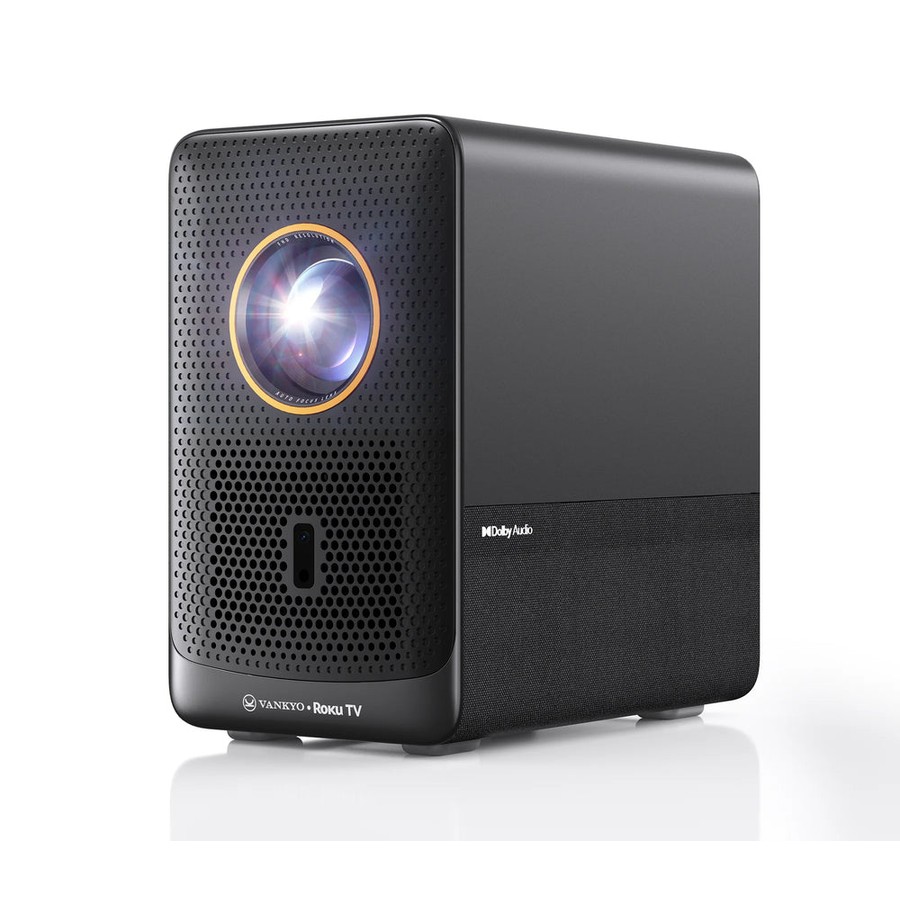
VANKYO Performance H500R 1080P Roku TV Smart Projector
- ✓Roku TV built in
- ✓Native 1080p, 330 ANSI lumens (maker spec)
- ✓Auto focus and auto keystone
- ✓Dual 5W speakers with Dolby Audio (maker spec)
- ✓HDMI 1.4, USB 2.0, audio out
VANKYO Performance V700G: the Google TV anchor
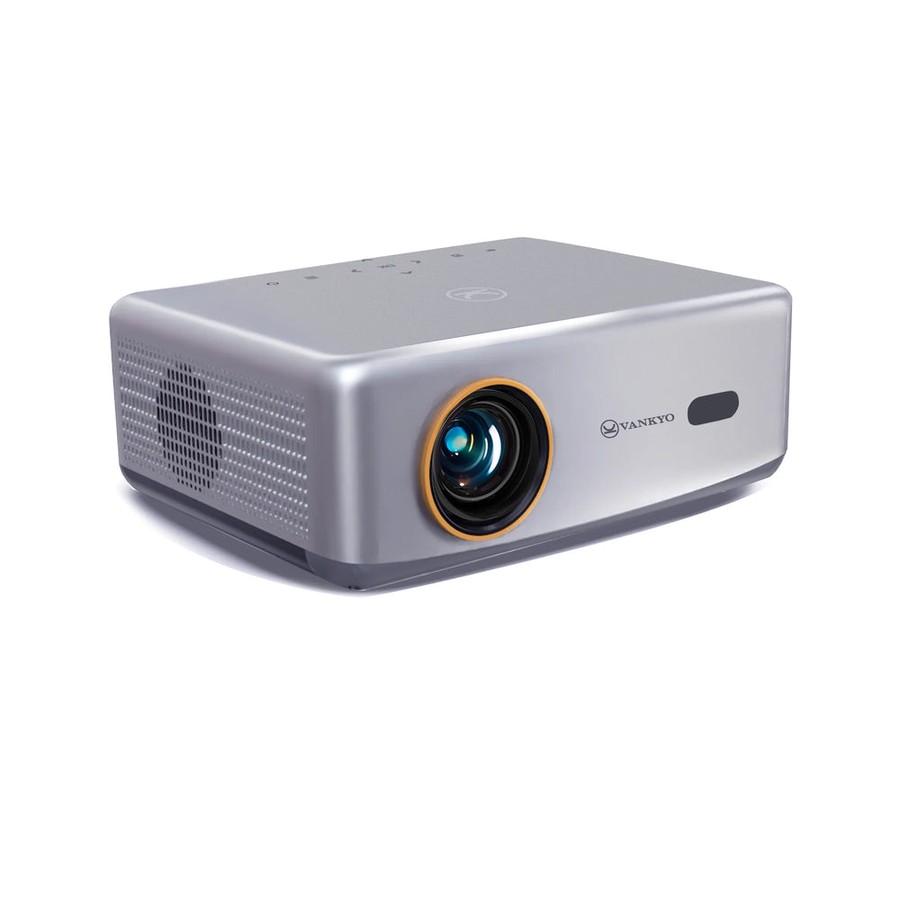
The V700G is the lineup's Google TV anchor: 400 ANSI lumens, native 1080p with 4K input support, HDR10+, dual 8W speakers with Dolby Audio (VANKYO's own spec table spells it "DoIby" on this and two other pages; the marketing copy spells it correctly, and the discrepancy is theirs, not a quote error), and the full automatic package: auto focus, auto keystone, automatic obstacle avoidance, automatic screen alignment — as its spec sheet publishes; the sheet, not a measurement, is the evidence. Two gigabytes of RAM and 16 GB of storage back the Google TV system.
VANKYO Performance V700G Native 1080P Projector with Official Google TV
- ✓Google TV built in
- ✓Native 1080p, 400 ANSI lumens, 4K input support (maker spec)
- ✓HDR10+ with dual 8W speakers and Dolby Audio
- ✓Auto focus, auto keystone, obstacle avoidance, screen alignment
- ✓2GB RAM, 16GB storage
VANKYO Performance V700G Pro: the brightness step-up
The step up from the V700G buys 730 ANSI lumens against 400 — a substantial brightness difference on the maker's own figures — plus a 120-inch screen in the box, which is part of what the delta covers. The rest of the spec sheet matches the V700G closely: Google TV, 1080p, HDR10+, dual 8W speakers, dual-band Wi-Fi. If your room can use the extra brightness, this is the model the extra money is for.
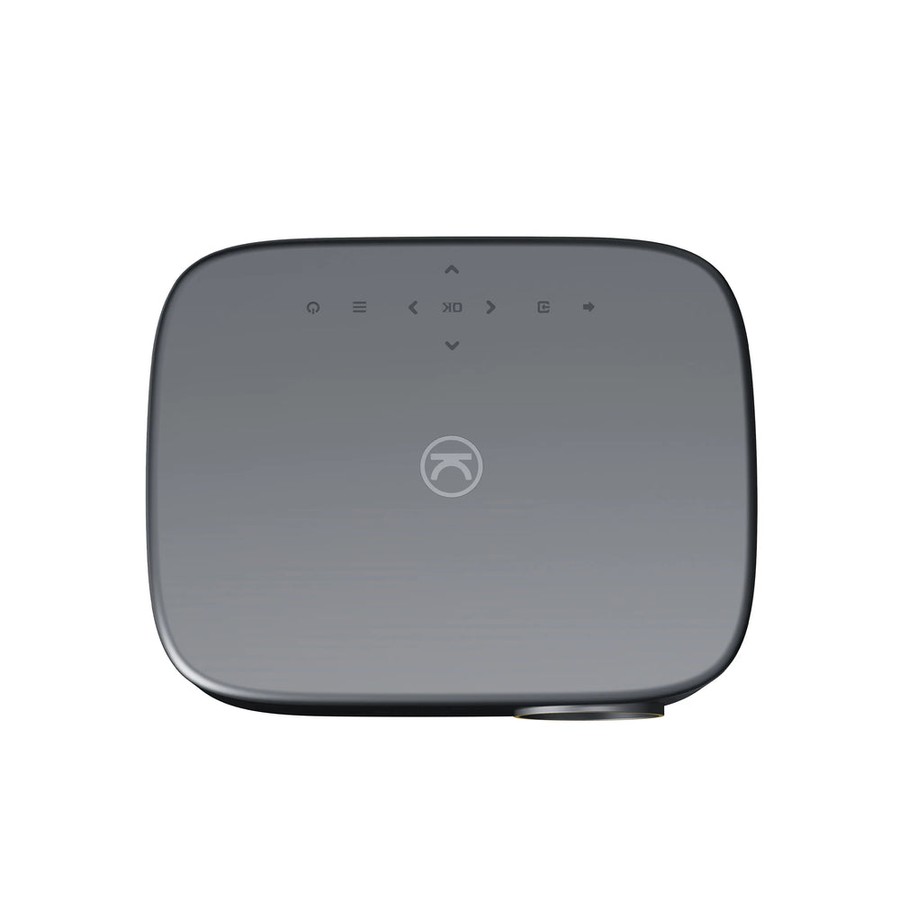
VANKYO Performance V700G Pro 1080P Google TV Projector with 120" Screen
- ✓730 ANSI lumens against the V700G's 400 (maker spec)
- ✓120-inch screen included in the package
- ✓Google TV, native 1080p, HDR10+
- ✓Dual 8W speakers with Dolby Audio
- ✓Auto focus, keystone, obstacle avoidance, screen alignment
VANKYO Vista T4: the 4K ultra short throw
The Vista T4 is a different category of purchase: a triple-laser ultra short throw with 4K UHD resolution that sits inches from the wall instead of across the room. The spec table lists 1,800 ANSI lumens typical, 1,650 minimum, 2,000 in boost mode (see the brightness section for the 2,100 marketing conflict), a 60W speaker system built from four 15W drivers with Dolby Audio per the maker's bullet, three HDMI 2.0 ports (one ARC), Ethernet, and Android TV 9.0 with 3GB of RAM and 32GB of storage. It is the pick for a dedicated living-room wall, and the model in this guide whose purchase deserves the most deliberation.
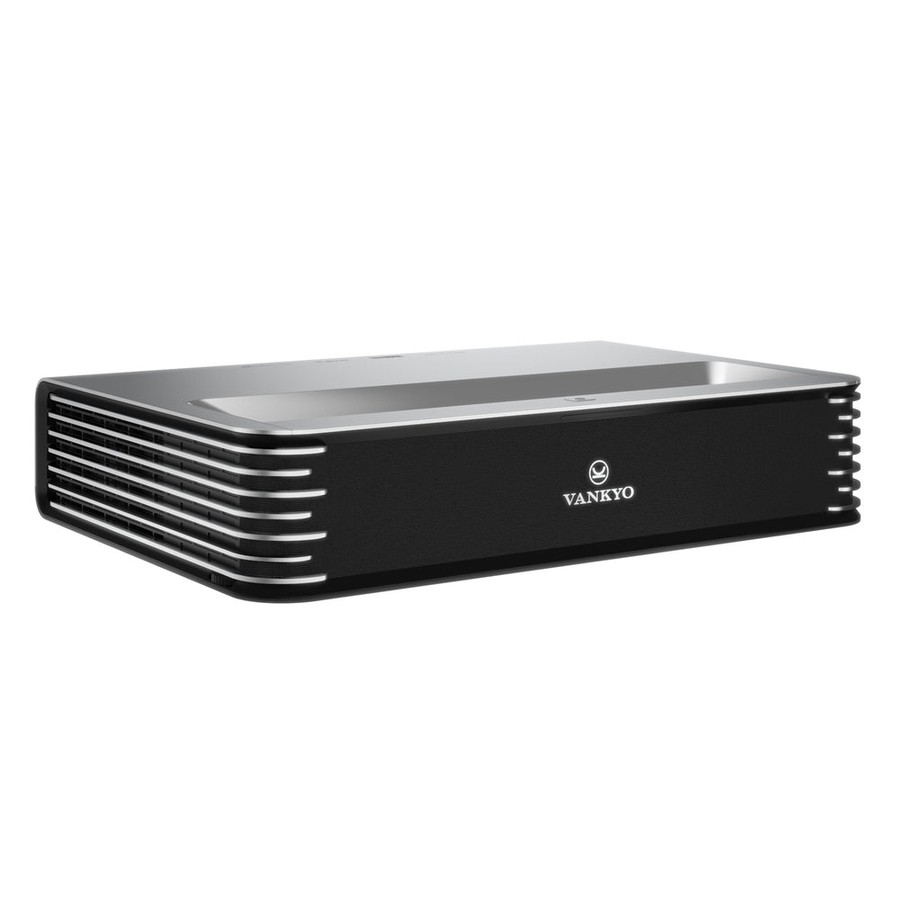
VANKYO Vista T4 4K UST Triple Laser Projector
- ✓4K UHD, RGB triple-laser ultra short throw (maker spec)
- ✓1,800 ANSI lumens typical; 1,650 min; 2,000 boost (maker spec; marketing copy claims 2,100)
- ✓60W speaker system, four 15W drivers, Dolby Audio per the maker's bullet
- ✓Three HDMI 2.0 ports (one ARC), Ethernet
- ✓Android TV 9.0, 3GB RAM, 32GB storage
Which one fits which room
A dark bedroom or dorm: the H500R or V700G, whichever streaming ecosystem you already pay into. A living room with some ambient light: the V700G Pro's 730 ANSI lumens, the maker's own figure, sits in this lineup's midrange and is the brightest of the three Performance models. A dedicated media wall with the budget for it: the Vista T4. Every figure in this section is the maker's published number, not a measured comparison; brightness ratings are not independently verified for any model here.
Before you order: shipping, returns and warranty
VANKYO ships free standard shipping to supported addresses in the contiguous United States only: no Alaska, no Hawaii, no Puerto Rico, no US territories, no military APO/FPO/DPO addresses. Most in-stock orders arrive in 3-7 business days, which the policy correctly calls an estimate rather than a promise.
Returns run 30 calendar days from delivery, for orders placed directly through ivankyo.com; the return policy routes purchases made from another online marketplace or an authorized retailer back through that original seller, not VANKYO. VANKYO covers reasonable return shipping on quality-related returns; you pay it on change-of-mind returns, and original shipping is generally non-refundable. The terms state there is no standard restocking fee on an eligible return.
The warranty is one year from purchase, with no registration required, and warranty service does not restart or extend the original period. Claims go through support@ivankyo.com with proof of purchase, and the policy is explicit: do not ship anything back before approval and instructions. The warranty covers manufacturing defects in normal use; the policy's own exclusion classes include normal wear, cosmetic damage, accident damage, misuse, liquid and dust exposure, voltage problems, and unauthorized disassembly or repair.
One purchasing note: VANKYO's terms of sale reserve the store for end users, and resale, redistribution or wholesale buying requires the company's written approval; a separate corporate purchase program exists for organizations. Worth knowing if you are buying for a school or business rather than yourself.
Reasons not to buy VANKYO
Fairness runs both directions, so here is the case against. No independent measurement of any current VANKYO model was found, so every performance number in this guide is the maker's own claim. The brand publishes no legal entity name anywhere on its storefront policies, only "VANKYO", with California governing law. And the H500R's availability was unstable at research time.
Frequently asked questions
Does VANKYO ship to Alaska or Hawaii? No. The shipping policy names contiguous US addresses only and explicitly excludes both states and all island territories. Can I return a VANKYO projector bought on Amazon to VANKYO? No; the return policy routes marketplace purchases back through the original seller. Do I need to register the warranty? No; keep proof of purchase. Which brightness figure should I trust on the Vista T4? The spec table's 1,800 ANSI typical is the committed figure; the 2,100 figure appears only in the marketing copy, both are the maker's own numbers, and no independent measurement of either exists. What about the V700 Neo? It is a near-duplicate of the V700G priced slightly above it at the time of research, and this guide covers the V700G instead; the exclusion section above gives the full reasoning. Which VANKYO projector should I buy? The one whose brightness, streaming system and throw distance match your room; the lineup spreads from 330 to 1,800 ANSI lumens and from Roku TV to 4K UST.
The verdict
VANKYO's smart projectors are priced against what their spec sheets commit to, with the unit caveats this guide explains, and the lineup is easy to shop once the brightness units are read correctly. The V700G is the sensible Google TV default; the V700G Pro is the brightness upgrade for rooms that are not fully light-controlled, on the maker's 730-ANSI figure and with the usual caveat that no independent measurement backs it; the H500R is the budget Roku play when it is actually in stock; and the Vista T4 is a serious living-room UST for a serious budget. The caveats travel with the purchase: maker-published numbers only, contiguous-US shipping, a 30-day return window that favors direct orders, and one year of warranty.
VANKYO's own storefront is the source for every product page, spec sheet and policy quoted above, all read on October 14, 2026. It remains the place to check current availability and prices before you order. Product photographs are sourced from VANKYO's official product galleries.
Visit the VANKYO store