ENGWE Electric Bikes: Which Model Should You Actually Buy? Folding, Commuter, and Cargo Bikes Compared
ENGWE builds folding e-bikes, full-size commuters and one cargo bike, all sold through its European storefront. This guide walks the lineup on the specs the store itself publishes - motor placement, battery Wh, weight with the battery included, and the warranty table most buyers never open.
The lineup, and what this guide does
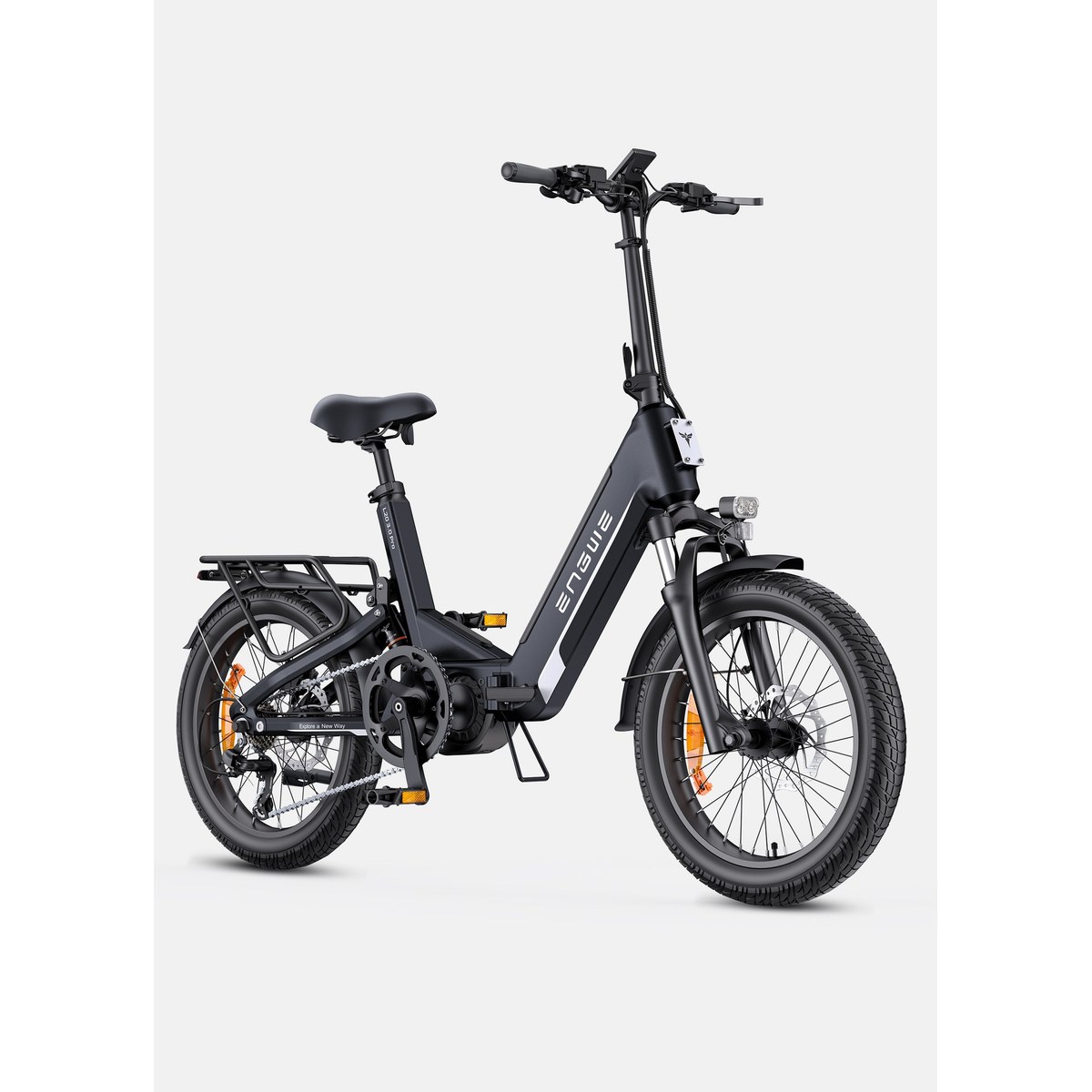
ENGWE sells electric bikes in three shapes: folders that collapse for a closet or a car trunk, full-size city bikes that do not fold, and one long-tail cargo bike. The store ships from EU warehouses to a list of European countries, prices in euros, and states speed and power figures written for European rules. That last part matters more than it sounds: a 25 km/h assisted ceiling is a legal boundary in the EU, not a design handicap, and a bike tuned the way these are cannot be compared head-to-head with a US-market throttle machine on top speed alone.
Everything below was read from ENGWE's own product pages, spec tables and policy pages on engwe.com, the European storefront, on October 26, 2026. Nobody at JellyReviews has ridden any of these bikes, so no sentence here reports how one rides. Where a number is the seller's, the sentence says so. Prices are in euros, were the listed figures on the day we read them, and change often - the store marks sale prices against higher compare-at figures, so treat every price here as a snapshot, not a promise.
Affiliate disclosure: JellyReviews may earn a commission when an eligible purchase is correctly attributed through an affiliate link. Attribution is handled by the store's own systems and can change, so no guarantee is implied here. Every ENGWE link on this page, including the policy and contact links, goes through our tracked redirect with the same referral parameter. The product photographs are ENGWE's own listing images; ENGWE does not endorse this guide, and its ownership of them is unchanged.
Who ENGWE's EU models suit
The folder is the whole pitch for half this lineup. A folding e-bike solves a storage problem first and a riding problem second: it goes in an apartment closet, under a desk, or in a hatchback next to groceries. The trade is weight. Most folders here weigh between 18.5 and 34.7 kg with the battery on board, and lifting one up a staircase is a different purchase decision from wheeling it into an elevator. One model, the P20, is light enough at 18.5 kg to carry for a flight of stairs; the fat-tire folders are not, and nobody should pretend otherwise.
The full-size bikes trade away folding entirely. The P275 SE is a classic city commuter with 27.5-inch wheels, and the N1 Air is a road-styled machine with thin 700c tires and a carbon fiber frame at 15.6 kg, which makes it the lightest bike in the entire lineup - lighter than every folder - because it carries no folding hardware, no suspension and no rack. The LE20 is the cargo option: an extended rear rack built for loads, dual-battery wiring, and turn signals. It is also the heaviest here at 36.8 to 41.5 kg depending on battery count, and it folds nothing.
One honest boundary on the whole lineup: ENGWE's EU spec tables state a 25 km/h assisted speed on every model we checked, and several frames carry a CE mark note referencing EN 15194, the European standard for pedal-assist cycles. That is the maker's own printed claim, not our verification, and what it means in practice depends on where you live and ride. The EU's type-approval regulation for these vehicles, Regulation 168/2013, carves out "pedal cycles with pedal assistance" whose motor cuts off at 25 km/h and 250 W - the class these bikes are built to fit. Nothing here is a claim about legality where you are; check your own local rules before you ride anything on this page.
The one table that separates the models
Spec sheets for e-bikes bury the two numbers that separate these bikes: where the motor sits, and how much energy the battery holds. Motor placement changes how a bike climbs and how it feels from the pedals; a mid-drive motor puts weight low and center and pushes through the drivetrain, while a hub motor sits in a wheel and pushes the wheel directly. Battery capacity in watt-hours is arithmetic on the store's own figures - volts times amp-hours - and it is the number behind every range claim a store prints.
- ▸L20 3.0 Pro: mid-drive, Mivice X700, 100 Nm, 48V 15Ah = 720 Wh (the store prints the Wh itself), 32.8 kg, full suspension with 30 mm rear travel, 20 x 3.0-inch tires, folds. EUR 1,699.
- ▸L20 3.0 Boost: hub motor, 75 Nm, 48V 13.5Ah = 648 Wh, 33.2 kg, full suspension, 20 x 3.0-inch tires, folds. EUR 1,399.
- ▸Engine Pro 3.0 Boost: hub motor, 90 Nm, 720 Wh, 34.7 kg, full suspension with 50 mm front and 62 mm rear travel, 20 x 4.0-inch fat tires, folds. EUR 1,699.
- ▸EP-2 3.0 Boost: hub motor, 75 Nm, 648 Wh, 32.3 kg, front suspension only (50 mm), 20 x 4.0-inch fat tires, folds. EUR 1,299.
- ▸P20: hub motor, 250 W, 42 Nm, 36V 9.6Ah = 345.6 Wh by our arithmetic (the store prints volts and amp-hours but not Wh), 18.5 kg, carbon belt drive, 20 x 1.95 city tires, folds. EUR 999.
- ▸P275 SE: hub motor, 250 W, 55 Nm, 36V 13Ah = 468 Wh by arithmetic, 24 kg, chain drive with a chain guard, 27.5 x 1.95 tires, hydraulic discs at 160 mm, does not fold. EUR 999.
- ▸N1 Air: rear hub motor, Mivice M070, 40 Nm, 36V 10Ah = 360 Wh by arithmetic, 15.6 kg, carbon fiber frame, 700 x 38C tires, does not fold. EUR 1,249 mechanical brakes or EUR 1,299 hydraulic.
- ▸LE20: mid-drive, 250 W, 100 Nm, 48V 19.2Ah = 921.6 Wh per battery by arithmetic, with a two-battery wiring option, 36.8 kg with one battery or 41.5 kg with two, 20 x 3.0-inch tires, turn signals, does not fold. EUR 1,249 (Standard, single battery) to EUR 1,695 (Passenger, dual) depending on configuration.
Read the torque column with its motor column, not alone. High torque from a mid-drive reaches the ground through your own gears, which is why the 100 Nm L20 3.0 Pro and LE20 are the two hill-climbers of this lineup. The same printed torque on a hub motor - the Engine Pro 3.0 Boost's 90 Nm - moves a heavy fat-tire wheel directly and behaves differently on a climb than the number suggests. And a torque sensor versus a speed sensor is a bigger difference than torque alone: all eight bikes on this page use a torque sensor that scales assistance to how hard you pedal; the M1 moped-style bike, which we did not card, is the one that uses a simpler speed sensor. The store says which, and so do we, because the ride difference is the kind of thing a spec-sheet photo cannot show.
The folding models
Four folders cover four different buyers. The L20 3.0 Pro is the flagship: the only mid-drive folder here, the only one with a printed folded dimension of 102 x 53 x 78 cm on its spec table, hydraulic dual-piston brakes with 180 mm rotors front and rear, and a Shimano 7-speed drivetrain. It is also 32.8 kg, which the spec table states as bike weight with the battery, and the listing tops this lineup at EUR 1,699. The maker's own range rows print 140 km at PAS 1, 110 km at PAS 3 and 96 km at PAS 5 - three figures with the assist level named, which is more honest than the single-number range claims most stores ship, and still the maker's own numbers rather than a measurement by us.
ENGWE L20 3.0 Pro folding e-bike
- ✓Mivice X700 mid-drive motor, 48V, 100 Nm max torque, torque sensor (maker spec table)
- ✓48V 15Ah battery, 720 Wh as printed by the store, LG or Samsung 21700 cells
- ✓Full suspension: hydraulic fork with adjustable lockout, 30 mm rear travel
- ✓Hydraulic dual-piston brakes, 180 mm rotors front and rear; Shimano Tourney 7-speed
- ✓Folded size 102 x 53 x 78 cm; bike weight 32.8 kg (72.3 lbs) with battery; max load 150 kg
- ✓Store range rows: 140 km at PAS 1, 110 km at PAS 3, 96 km at PAS 5 - maker figures, not ours
- ✓Listed at 1,699.00 EUR on engwe.com, October 26, 2026
The L20 3.0 Boost is the same folded shape with a hub motor instead of the mid-drive, 648 Wh instead of 720, and EUR 300 less on the listing. It keeps the full-suspension frame, the torque sensor, the 180 mm hydraulic brakes and the Shimano 7-speed. Where the 3.0 Pro prints a folded size, the Boost's spec table this time did not, so we state none - the two bikes share a family look and not every shared number is printed on both pages. At EUR 1,399 it is the mid-range folder, and its own range rows read 120/100/85 km across PAS 1/3/5.
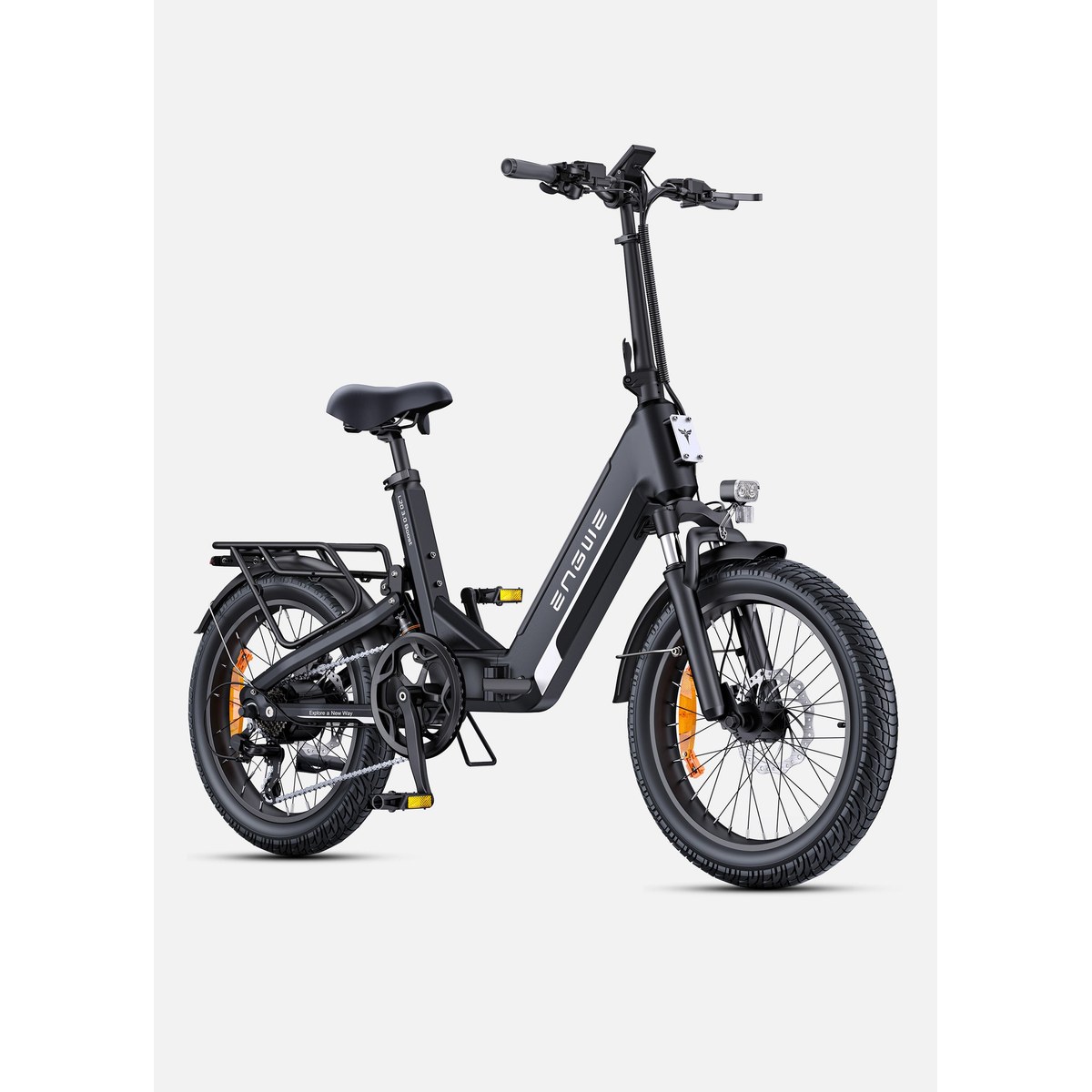
ENGWE L20 3.0 Boost folding e-bike
- ✓48V hub motor, 75 Nm max torque, torque sensor (maker spec table)
- ✓48V 13.5Ah battery, 648 Wh as printed by the store, 21700 cells with BMS
- ✓Full suspension: hydraulic fork with adjustable lockout, 30 mm rear travel
- ✓Hydraulic dual-piston brakes, 180 mm rotors front and rear; Shimano Tourney 7-speed
- ✓Bike weight 33.2 kg (73.2 lbs) with battery; max load 150 kg
- ✓Store range rows: 120 km at PAS 1, 100 km at PAS 3, 85 km at PAS 5 - maker figures
- ✓Listed at 1,399.00 EUR on engwe.com, October 26, 2026
The Engine Pro 3.0 Boost is the fat-tire folder, and it is the heaviest folding bike on this page at 34.7 kg. Its spec table names the certification most explicitly of any page here - "CE EN15194 by TUV certification" - and prints suspension travel at both ends: 50 mm front, 62 mm rear. The 20 x 4.0-inch tires and moped-style stance put it closest to the M20 family look, and at 720 Wh it carries the same battery energy as the L20 3.0 Pro in a heavier package. EUR 1,699, matching the L20 3.0 Pro listing.
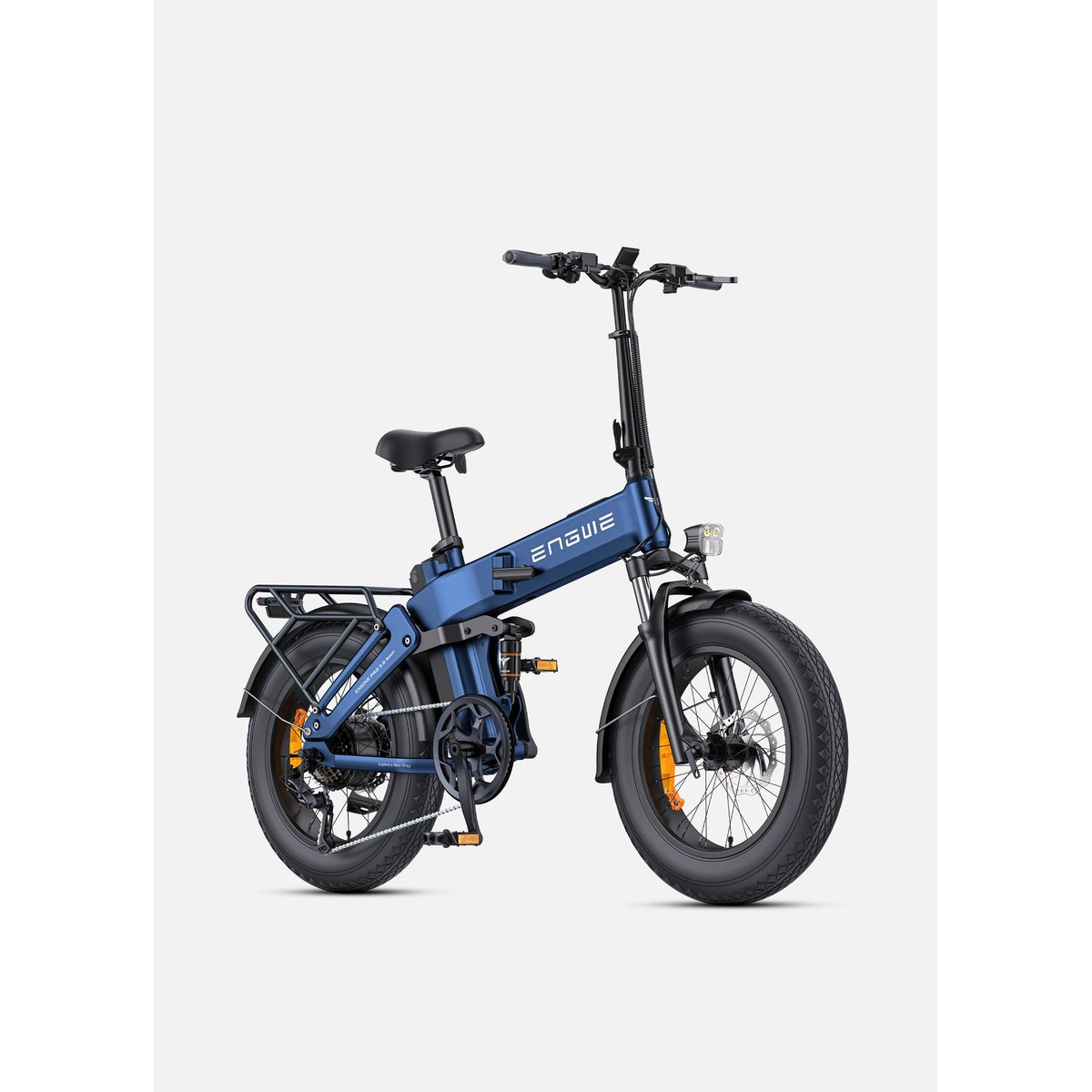
ENGWE Engine Pro 3.0 Boost folding fat-tire e-bike
- ✓48V hub motor, 90 Nm max torque, torque sensor (maker spec table)
- ✓48V 15Ah battery, 720 Wh as printed by the store, LG or Samsung cells
- ✓Full suspension: 50 mm front and 62 mm rear travel, printed on the spec table
- ✓Certification row reads: CE EN15194 by TUV certification - the maker's own claim
- ✓20 x 4.0-inch fat tires; bike weight 34.7 kg (76.5 lbs); max load 150 kg; magnesium alloy frame
- ✓Store range rows: 130 km at PAS 1, 108 km at PAS 3, 80 km at PAS 5 - maker figures
- ✓Listed at 1,699.00 EUR on engwe.com, October 26, 2026
The EP-2 3.0 Boost is the fat-tire folder that drops the rear suspension, drops EUR 400 from the Engine Pro listing, and drops one printed number more: 648 Wh against the 720 of the Engine Pro, and 75 Nm against its 90, on the same 20 x 4.0-inch tires with hydraulic brakes at 180 mm. The charger is the give-away difference - 54.6V at 4A against the 8A chargers on the other three folders, so a full charge takes meaningfully longer on the same wall outlet. It also carries the one warranty upgrade in the entire lineup, covered in the warranty section below, because the store's warranty page names this exact model for 24-month coverage on core components.
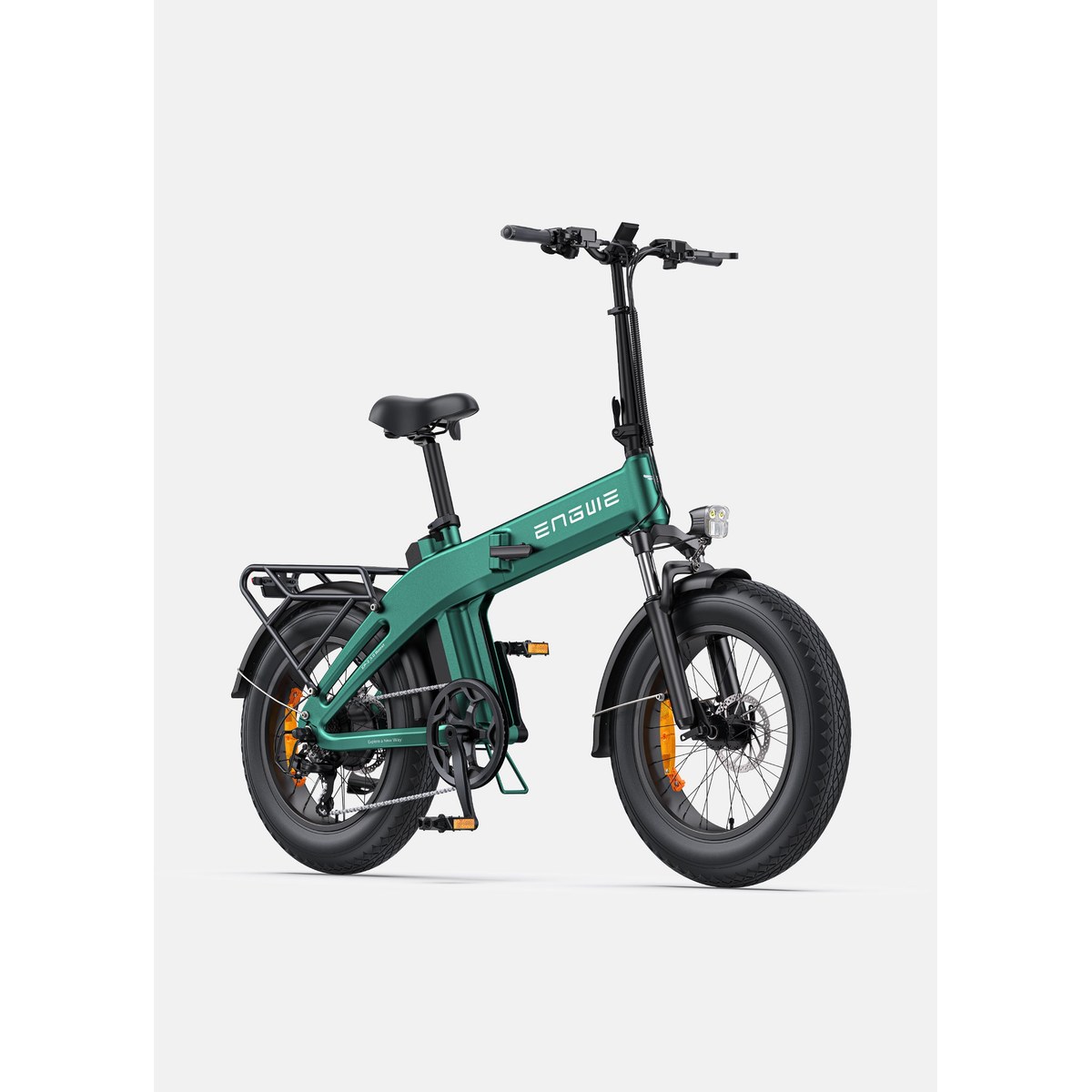
ENGWE EP-2 3.0 Boost folding fat-tire e-bike
- ✓48V hub motor, 75 Nm max torque, torque sensor (maker spec table)
- ✓48V 13.5Ah battery, 648 Wh as printed by the store, 21700 cells with BMS
- ✓Front suspension only: 50 mm travel hydraulic fork with lockout, no rear suspension
- ✓Certification row reads: CE EN15194 by TUV certification - the maker's own claim
- ✓Charger 54.6V at 4A output - slower than the 8A chargers on the other three folders
- ✓Named on ENGWE's warranty page for 24-month coverage on core components (see the warranty section)
The light one and the city ones
The P20 is the folder for people who carry their folder. At 18.5 kg with battery it is more than 11 kg lighter than the L20 family and within 3 kg of the non-folding N1 Air, and it gets there by dropping the suspension entirely, running narrow 20 x 1.95 city tires, and driving the rear wheel with a carbon belt instead of a chain. The spec table prints 42 Nm from its 250 W hub motor, a 5-hour charge, and a single 100 km range row - one figure, no assist-level breakdown, so treat it as the maker's best case rather than a table to compare against the L20's three rows. What the page does not print anywhere we captured: a payload limit, a ride-height range or a certification row. We state none of those for this bike.
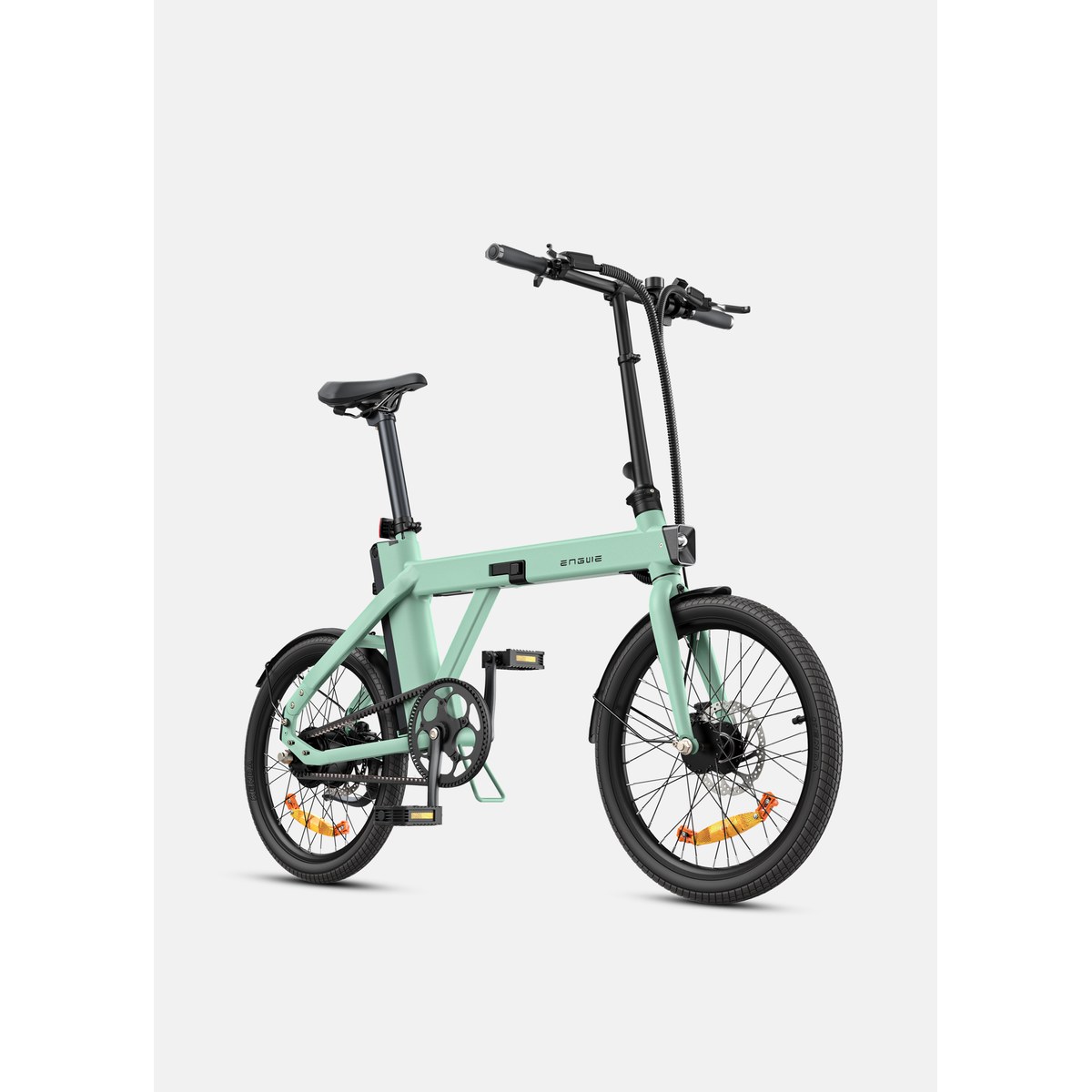
ENGWE P20 lightweight belt-drive folding e-bike
- ✓250 W hub motor, 42 Nm torque, torque sensor; carbon belt drive, no chain (maker spec table)
- ✓36V 9.6Ah battery; 345.6 Wh by arithmetic on the store's own volts and amp-hours - the page does not print Wh
- ✓Bike weight 18.5 kg (40.7 lbs) with battery - the lightest folding bike in this lineup
- ✓Hydraulic disc brakes; 20 x 1.95 city tires; 25 km/h stated assisted speed
- ✓Store range row: 100 km, a single figure with no assist-level breakdown
- ✓Spec table prints no payload limit, ride-height range or certification row - none claimed here
- ✓Listed at 999.00 EUR on engwe.com, October 26, 2026
The P275 SE is what the folder becomes when nothing folds. It is a 24 kg city bike on 27.5-inch wheels with a classic diamond frame, a chain drive behind a full chain guard - ENGWE's page calls the guard out for keeping "oil and chain jams away" - and hydraulic discs at 160 mm. The battery is removable at 36V 13Ah, or 468 Wh by the same arithmetic, and its range table is the P20's opposite: three rows at 100/80/65 km across PAS 1/3/5. IP54 is printed as the full-bike waterproof rating, which is a dust-and-splash rating, not a wash-it-with-a-hose rating.
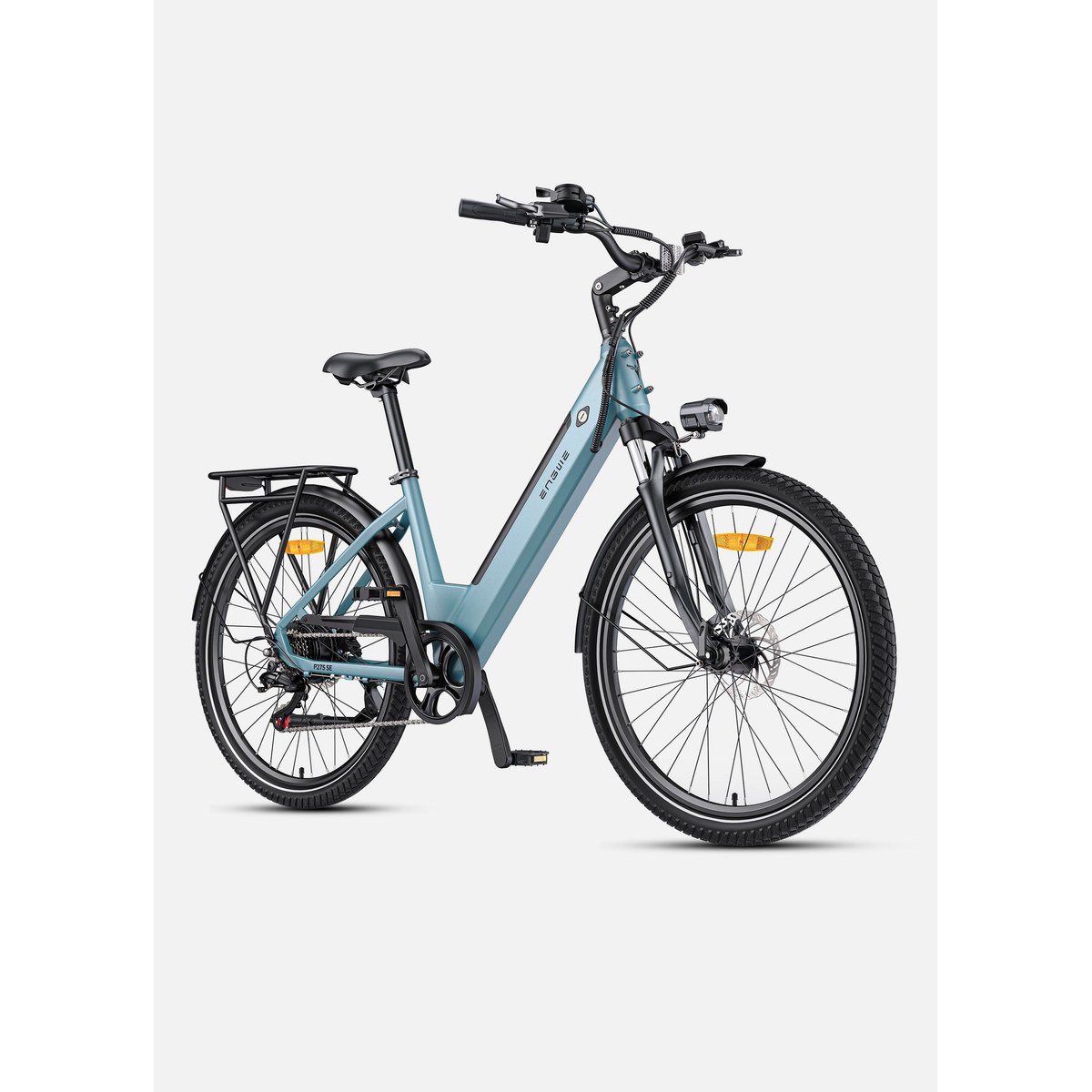
ENGWE P275 SE city commuter e-bike
- ✓250 W brushless hub motor, 55 Nm max torque, torque sensor; Shimano 7-speed (maker spec table)
- ✓36V 13Ah removable battery; 468 Wh by arithmetic on the store's own figures
- ✓Chain drive behind a full chain guard - the store: "keeps oil and chain jams away"
- ✓Hydraulic disc brakes, 160 mm front and rear; 27.5 x 1.95 city tires; IP54 full-bike rating
- ✓Bike weight 24 kg; front and tail lights included; does not fold
- ✓Store range rows: 100 km at PAS 1, 80 km at PAS 3, 65 km at PAS 5 - maker figures
- ✓Listed at 999.00 EUR on engwe.com, October 26, 2026
The N1 Air is the oddity worth understanding before you skip it. It is a 15.6 kg bike with a carbon fiber frame and aluminium fork, 700 x 38C road-style tires, a Mivice M070 rear hub at 40 Nm, and no rack, no suspension and no folding hinge. It is the lightest bike in the ENGWE lineup we compared, and it rides the furthest from every other bike here in intent: this is a fitness-and-commute machine, and its 40 Nm is the lowest torque figure on this page because it does not need to move 30 kg of bike up a hill, only 15.6. It sells in two trims - mechanical disc brakes with a Shimano SL-TX50-7R shifter at EUR 1,249, or hydraulic discs with the SL-M315-7R at EUR 1,299 - and the store's spec table spells out exactly which parts change between them, down to steel versus plastic fenders. Its range row is a single 100 km at PAS 1, like the P20's.
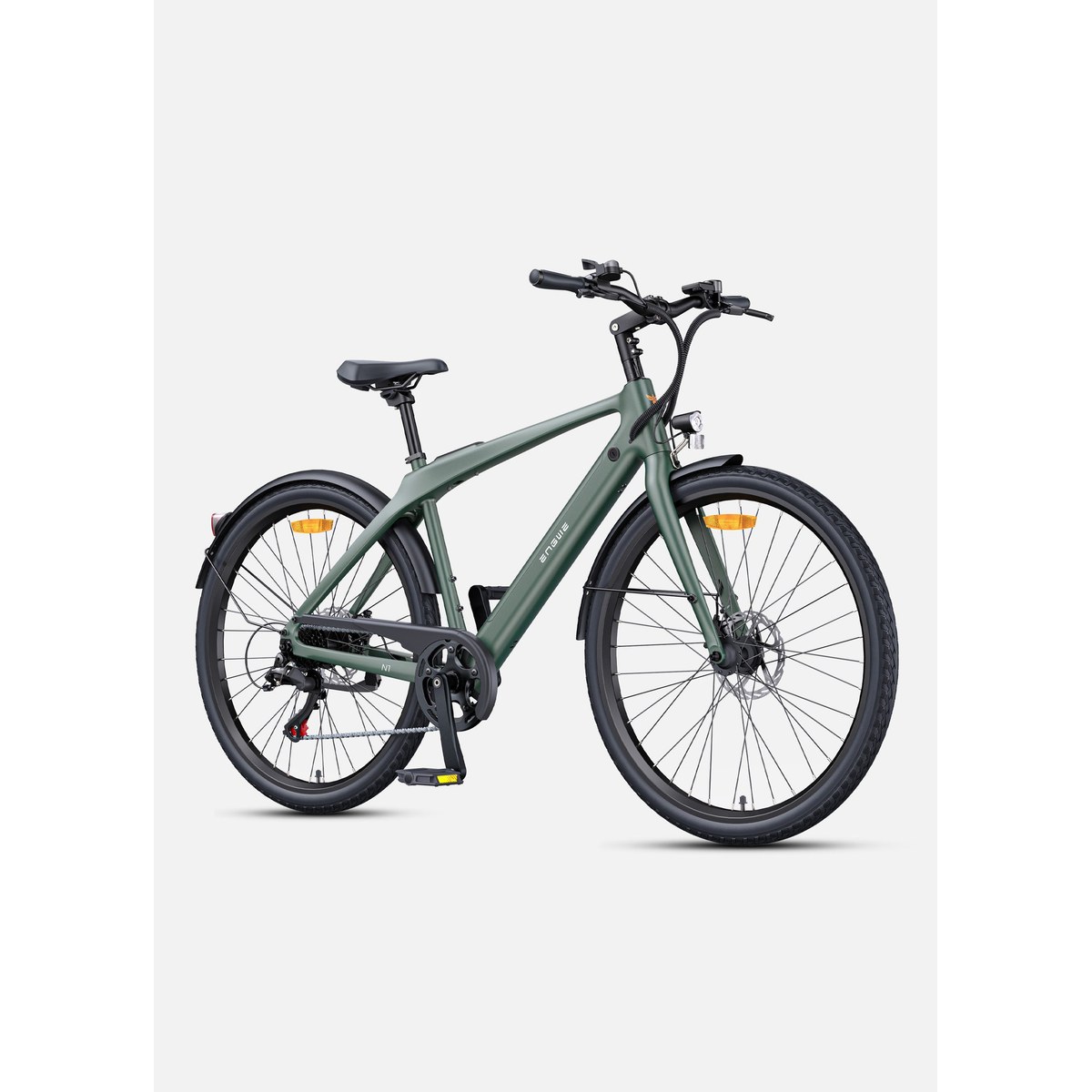
ENGWE N1 Air carbon-frame urban e-bike
- ✓Mivice M070 rear hub motor, 40 Nm max torque, torque sensor (maker spec table)
- ✓Carbon fiber frame, aluminium fork, 700 x 38C tires - the road-styled bike of this lineup
- ✓36V 10Ah Samsung removable battery; 360 Wh by arithmetic on the store's own figures
- ✓Bike weight 15.6 kg (34.39 lbs) - the lightest bike in the entire ENGWE lineup we compared
- ✓Two trims: mechanical 160 mm discs at EUR 1,249, hydraulic 160 mm discs at EUR 1,299, parts listed per trim
- ✓Store range row: 100 km at PAS 1, a single figure; maximum climbing degree 10 deg - maker figures
- ✓Mechanical trim listed at 1,249.00 EUR; hydraulic trim at 1,299.00 EUR on engwe.com, October 26, 2026
The cargo one
The LE20 is ENGWE's long-tail cargo bike, and it is the only bike here where the battery question has a multiplier. One 48V 19.2Ah pack - 921.6 Wh by arithmetic, the largest single battery on this page - or two of them wired together. The spec table prints two range rows and, unusually, prints their conditions inside the rows: 180 km for one battery, 350 km for two, each "(In PAS Mode 1, with 75kg rider and no other load.)". That is the most explicit range-condition statement we captured on the whole storefront, and it is still a maker claim with a test rider, flat terrain and the lowest assist level built into it. A loaded cargo run at PAS 3 will not see either number, and the store's own row tells you why before we have to.
The motor is the other half of the cargo story: a 250 W mid-drive at 100 Nm, matching the L20 3.0 Pro's torque figure but pushing a bike that weighs 36.8 kg before you load it. Brakes are hydraulic at 180 mm, gears are Shimano 7-speed, and the bike carries front and rear turn signal lights, which no other bike here has. Configurations run from the EUR 1,249 Standard single-battery build to the EUR 1,695 Passenger dual-battery build, with Cargo, FlashCharge and canvas-accessory variants between them - the exact same bike under the accessory packs, which is worth checking before you pay the Passenger-pack difference for a seat and rails.
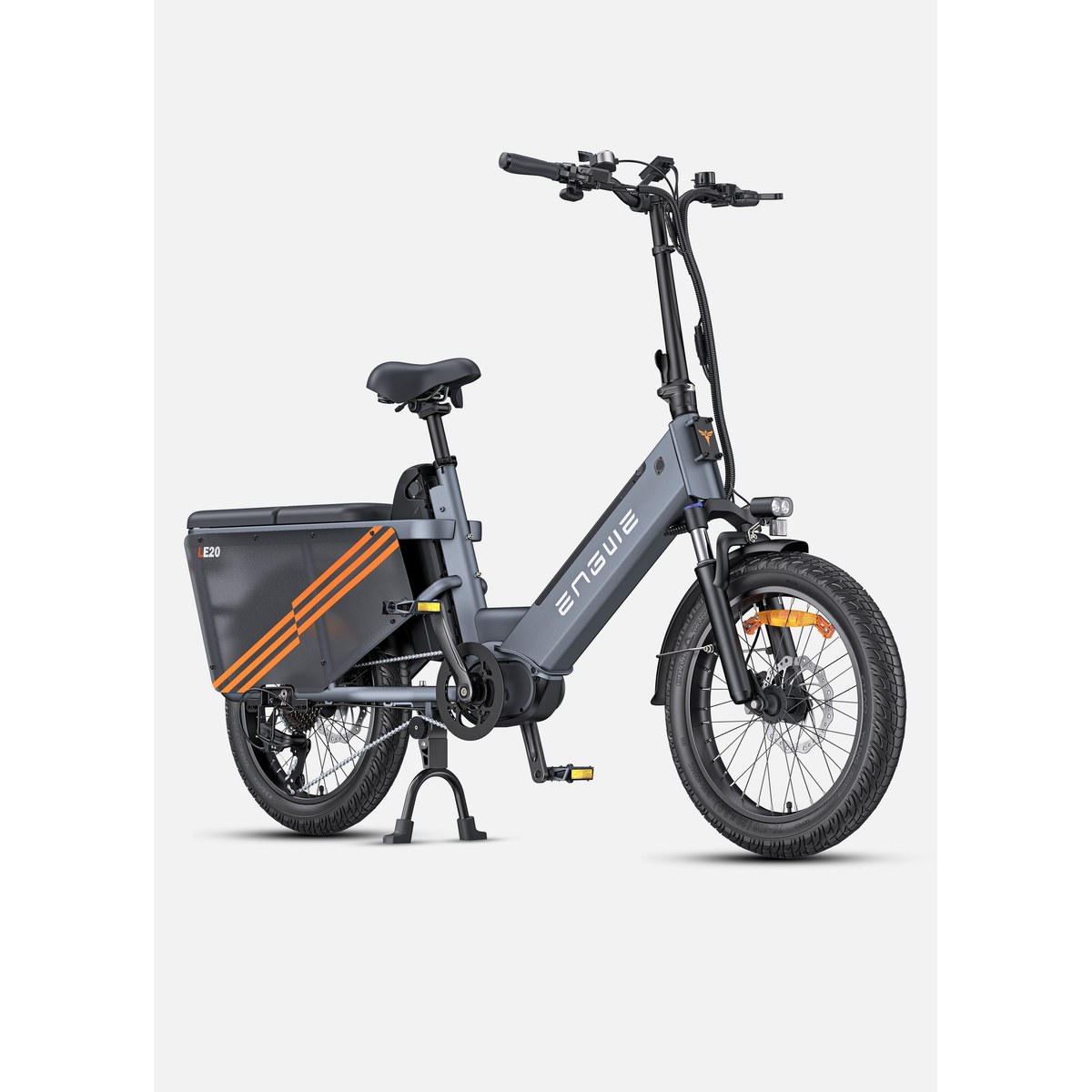
ENGWE LE20 cargo e-bike
- ✓48V 250W mid-drive motor, 100 Nm max torque, torque sensor (maker spec table)
- ✓48V 19.2Ah battery, 921.6 Wh by arithmetic; dual-battery wiring option doubles it
- ✓Store range rows print their own conditions: 180 km single / 350 km dual, both "In PAS Mode 1, with 75kg rider and no other load"
- ✓Front light plus rear turn signal lights - the only bike on this page with turn signals
- ✓Bike weight 36.8 kg with one battery, 41.5 kg with two; 20 x 3.0-inch puncture-proof tires; 180 mm hydraulic discs
- ✓Configurations: Standard 1,249 / Cargo 1,380 / FlashCharge 1,384 / canvas 1,487 / Passenger 1,495, all single-battery listings
- ✓Standard single-battery listed at 1,249.00 EUR on engwe.com, October 26, 2026
What advertised range does and does not prove
Every range figure on this page is the maker's, and the makers do not measure them the same way. ENGWE's own tables split into two habits: the L20 family and the P275 SE print a row per assist level, and the P20 and N1 Air print one number. The one-battery LE20 goes furthest and explains itself best - 180 km "In PAS Mode 1, with 75kg rider and no other load" - which is exactly how you should read every other row on this page: at the gentlest assist, with a light rider, carrying nothing. PAS 5 on the same bike's table or a 120 kg rider with panniers will land far below any row we have quoted.
The honest way to use these numbers is not the absolute figure but the spread within one table. The L20 3.0 Pro loses 44 km from PAS 1 to PAS 5 in its own rows - that is what assist level costs on a 720 Wh battery. The P20's single 100 km row next to its 345.6 Wh arithmetic says the same thing from the other direction: the smallest battery here claims a number that is roughly half of the largest printed figure on this page, the single-battery LE20 row. Range scales with Wh more reliably than with any claim, and Wh is arithmetic you can check: volts times amp-hours, printed on every spec table we read.
And charging is part of the range question. The store prints charger output per model: 8A on the L20 family and Engine Pro, 4A on the EP-2 3.0 Boost, 5 hours quoted for the P20's smaller pack, 5 to 7 for the P275 SE, and the LE20 offers a fast charger that cuts 6 to 8 hours to 2 to 3. If your charging spot is a garage socket overnight, the slow chargers cost nothing. If you charge between errands, the difference is a real one.
Brakes, suspension and tires, briefly
Brakes separate the lineup almost by size. Hydraulic disc brakes are the default across the eight; the one exception is a trim, not a bike: the Mechanical Version of the N1 Air runs mechanical discs, and it is the only cable-pull stopper here. The rotors differ: 180 mm front and rear on the L20 family and the LE20, 160 mm on the P275 SE and N1 Air, and 160 mm for the Mechanical Version trim of the N1 Air. Heavier bike, bigger rotors is the pattern, and it is the correct one.
Suspension splits the folders from each other. The L20 3.0 Pro and Boost carry 30 mm of rear travel; the Engine Pro 3.0 Boost carries 50 mm front and 62 mm rear, the longest printed travel here; the EP-2 3.0 Boost drops rear suspension for a front-only fork; the P20 drops suspension entirely, which is most of how it hits 18.5 kg. None of these figures is a claim about comfort - travel millimetres are printed, ride quality is not - but the printed pattern tells you which folder was built for washboard pavement and which for smooth bike lanes.
Tires follow the same split. 20 x 3.0-inch hybrids on the L20s, 20 x 4.0-inch fats on the Engine Pro and EP-2, 20 x 1.95 city rubber on the P20, 27.5 x 1.95 on the P275 SE, 700 x 38C on the N1 Air, 20 x 3.0 puncture-proof on the LE20. Fat tires add comfort and grip and subtract range and agility; that trade is physics, not marketing, and both sides of it are on this page in the store's own numbers.
The certification rows, as printed
Four bikes print a certification line in their spec tables: the L20 3.0 Pro and Boost read "Certification: CE (EN15194)", and the Engine Pro 3.0 Boost and EP-2 3.0 Boost read "CE EN15194 by TUV certification" - a notified body named on the last two, and not on the first two. The P20, P275 SE, N1 Air and LE20 spec tables we captured print no certification row at all, and we state none for them. Every one of those lines is the maker's own table entry, not a certificate we have seen, and EN 15194 itself is a paywalled CEN standard, so our check is the EU regulation that defines the vehicle class: Regulation 168/2013 excludes from its own scope the "pedal cycles with pedal assistance" whose motor cuts off by 25 km/h at 250 W continuous rated power. That is the class description these bikes are built to fit. It is not a compliance certificate for any specific bike, and a buyer who needs documented compliance should ask the store for the paperwork before ordering, not after.
Warranty, as the component table reads
ENGWE's warranty page is a component table, not a single number, and the difference between the headline and the table is where buyers get surprised. Frame, fork components, motor and the main electric parts: 12 months. Battery: 12 months, with a capacity-below-60% replacement standard, and a replacement battery inherits the remaining term of the original rather than starting fresh. Tires: one month, with punctures by sharp objects explicitly outside it. Saddles, plastic parts, rotors, pads and cables: three months. Kickstands, fenders, racks, pedals, chains and most of the rest of the moving parts: six months. Modified and second-hand bikes are excluded outright, and an extended warranty exists as a paid add-on that must be bought with the bike.
ENGWE's warranty page carries the full component table: 12 months on frame, motor and main electrics, 1 month on tires, 3 on saddles and pads, 6 on the consumable parts group, and the EP-2 3.0 Boost-specific extension below it.
Read the warranty tableOne model breaks the pattern, and the warranty page names it in its own section: the EP-2 3.0 Boost. Its core components - frame, fork and handlebar assembly, control unit, charger, display, throttle, torque sensor, brake lever, the motor's internals and the battery - are upgraded to 24 months, with the battery capped at 10,000 km, whichever comes first. Tires stay at one month, saddles and brake discs at three. If warranty term is what you are shopping on, the store itself makes the EP-2 the longest-backed bike on this page despite being the lower-listed fat-tire option.
Claims run through service@engwe.com with photos or a short video and the order number, per the page's own five steps, and the store lists two EU phone lines - +33 805980036 and +39 800776809 - staffed 9:00 to 6:00 GMT+1, Monday to Friday.
Returns and shipping, without the marketing
The return page is 30 days from receiving the bike, and the fine print has three parts worth reading before you order anything. First, eligibility: the bike must be under 10 km on the display, complete with every box item, in original packaging, with proof of purchase. Second, the cost: a non-quality return on an e-bike carries a EUR 200 per-bike fee, and an unused battery EUR 100 - so a change of mind is not a free window, it is a EUR 200 one. Third, cancellations: before shipping costs a 5% processing fee; after shipping, EUR 200 per bike. A genuine defect inside 30 days is a different path - free return or exchange, with a EUR 100 shipping fee that the page says is not refunded even then - and past 30 days, the store's remedy is repair under guidance, not refund.
Shipping is EU-only as far as the page goes: EU warehouses, 2 to 5 business days to France and Poland, 7 to 10 to a list of two dozen other EU countries, free by DPD or EUR 50 by FEDEX for bikes, and free DPD/DHL for accessories. The page processes in-stock orders within two business days and dispatches on the third. There is no US, UK or Vietnam delivery on this page - if you are outside the listed countries, the store cannot ship to you as far as its own policy states, and a different ENGWE storefront is a different store with different terms, which we have not audited.
What to confirm before you order
- ▸Your country is on the shipping page's list, and the checkout shows the total in your currency with the delivery window the page promises.
- ▸Which battery the bike ships with: the L20 3.0 Pro page says LG or Samsung 21700 cells "shipped based on availability", which is the store reserving the right to vary a component.
- ▸The accessory pack, if you are buying an LE20: the configurations are the same bike with different rack, seat and charger bundles, with listings up to EUR 446 apart.
- ▸The warranty extension, if you want it: the store sells it only at bike-purchase time, not after.
- ▸Local law, from the source: the EU regulation defines the 250 W / 25 km/h pedal-assist class, and your own country or state layers its rules on top. We quote both the store's claims and the regulation, and we certify neither.
Frequently asked questions
Are ENGWE e-bikes legal where I live? The EU storefront builds its bikes around the 250 W and 25 km/h pedal-assist class that EU Regulation 168/2013 defines, and four spec tables print CE marks referencing EN 15194 - the maker's claim, two of them naming TUV. What that means for you depends on your own country's rules, which we do not know and do not state. Ask the store for compliance paperwork if your use case needs it.
Which ENGWE is the lightest? The N1 Air at 15.6 kg - a non-folding carbon-frame city bike. Among the folders, the P20 at 18.5 kg is the one you can realistically carry up stairs; every other folder here weighs 26.5 kg or more with the battery. The heaviest is the LE20 cargo at 41.5 kg with two batteries.
Is a mid-drive worth it over a hub motor? The two mid-drives here - the L20 3.0 Pro and LE20, both at 100 Nm - push through the drivetrain, which is the design you want for sustained hills and heavy loads. The hub motors are simpler and fine for flatter cities, and the same folded shape carries a EUR 300 listing gap between the two: EUR 1,699 for the mid-drive Pro against EUR 1,399 for the Boost.
How long does the battery take to charge? Between 5 hours (P20) and 6 to 8 hours on the standard chargers, with 4A versus 8A charger output splitting the folders. The LE20 offers a fast charger that brings a full charge to 2 to 3 hours. All figures are the store's.
What does an ENGWE warranty cover? Components, not the bike: 12 months on frame, motor and main electrics, one month on tires, three on saddle and brake pads, six on most moving parts, with a 60%-capacity standard on batteries and replacements inheriting the remaining term. The EP-2 3.0 Boost is the named exception with 24 months on core components. Read the table before the headline.
Can I return one if I change my mind? Within 30 days, with the bike under 10 km on the display and everything in the box - and it costs EUR 200 on an e-bike. Quality defects follow a different path with different costs. The return page is linked above and worth ten minutes before checkout.
Does JellyReviews ride these bikes? No. Every figure on this page comes from ENGWE's own product and policy pages, read on October 26, 2026, and every sentence that reports a performance number reports it as the maker's. Where the store prints a number and the condition behind it, we printed both.
Where to go next
The manuals are the most under-used page on any e-bike store: ENGWE publishes per-model user manuals as PDFs in eight languages, readable before you spend anything, and they answer the assembly and maintenance questions the product pages skip.
Two other pages on this site cover the rest of the e-bike decision. If the bike you already own is fine and you only want electric, conversion kits are the other path, and the YOSE POWER guide covers them on the same read-the-specs method. And if you are comparing complete e-bike brands before choosing, the VIVI guide covers a lineup that runs from commuters to a cargo trike, with a battery recall worth reading about regardless of brand.
The EU regulation behind the 25 km/h class, quoted in the certification section, is on EUR-Lex if you want the primary source rather than a store's summary of it. Everything else worth reading - the full spec tables, the warranty component table, the return conditions and the country list - lives on the storefront itself, and every one of those links on this page goes there through our tracked redirect.
If a spec question survives this guide - a battery cell question, a fit question, an accessory question on an LE20 configuration - the store's own contact page is the shortest route to an answer from the people who ship the bikes.
And the whole storefront - the eight bikes above, the accessory packs, the batteries and chargers, and the current sale figures - is one click away. The fine print of any purchase is the terms page, so it is linked right below the store.