Supplements · Vitamins, minerals, nootropics & protein

The best probiotics of 2026

The best probiotic supplements, ranked on named strains with published trials behind them, CFU count, and how the capsule survives stomach acid.

We compared probiotics on what the label actually commits to: named strains rather than a proprietary blend, CFU count, the delivery mechanism, and whether the strain has clinical trials behind it. These five came out on top.

Last updated
January 15, 2026
How we rank: published specs, third-party certifications, and what verified buyers report.
§ 01 · Top 5 Rankings

Our top 5 picks for probiotics

As an Amazon Associate I earn from qualifying purchases.

#1
EDITOR'S CHOICE
Renew Life Ultimate Flora Extra Care
Zoom
Renew Life

Renew Life Ultimate Flora Extra Care

9.6/10JellyReviews Score

Renew Life Ultimate Flora is the best overall probiotic here. It pairs a high 30 billion CFU count with 12 named strains across Lactobacillus and Bifidobacterium, and the delayed-release capsule is built to open past the stomach rather than dissolve in it. No refrigeration needed. Best for general gut health.

Pros
30 billion CFU per capsule on the label
12 strains including Lactobacillus + Bifidobacterium
Delayed-release capsule survives stomach acid
Refrigeration not required
Cons
Premium price
Single daily dose only
May cause initial gas/bloating
Where to buy
Amazon
Check Price
We may earn a commission from this link.
#2
MOST CLINICALLY STUDIED
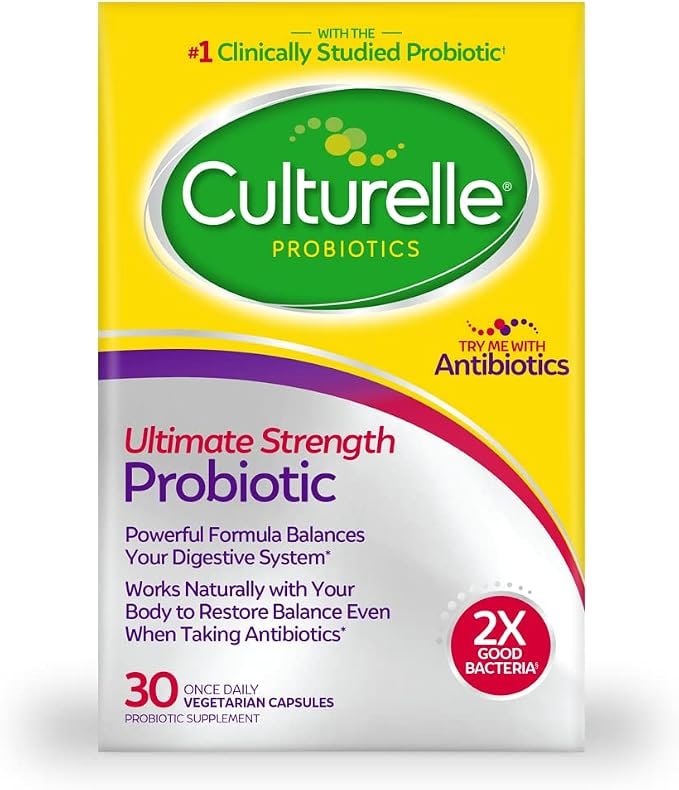
Culturelle Digestive Daily Probiotic
Zoom
Culturelle

Culturelle Digestive Daily Probiotic

9.4/10JellyReviews Score

Culturelle uses Lactobacillus rhamnosus GG, the single most-studied probiotic strain, with 1,000+ clinical trials behind it. Single-strain, but the research backing is unmatched, and LGG is among the most-studied strains for antibiotic-associated diarrhea. Best for targeted digestive issues and post-antibiotic recovery.

Pros
Lactobacillus rhamnosus GG (most-studied probiotic strain)
10 billion CFU per capsule
Clinically proven for digestive + immune health
Survives stomach acid naturally (no coating needed)
Cons
Single-strain (less diverse)
Lower CFU than Renew Life
Capsules contain dairy traces
Where to buy
Amazon
Check Price
We may earn a commission from this link.
#3
Garden of Life Raw Probiotics
Zoom
Garden of Life

Garden of Life Raw Probiotics

9.2/10JellyReviews Score

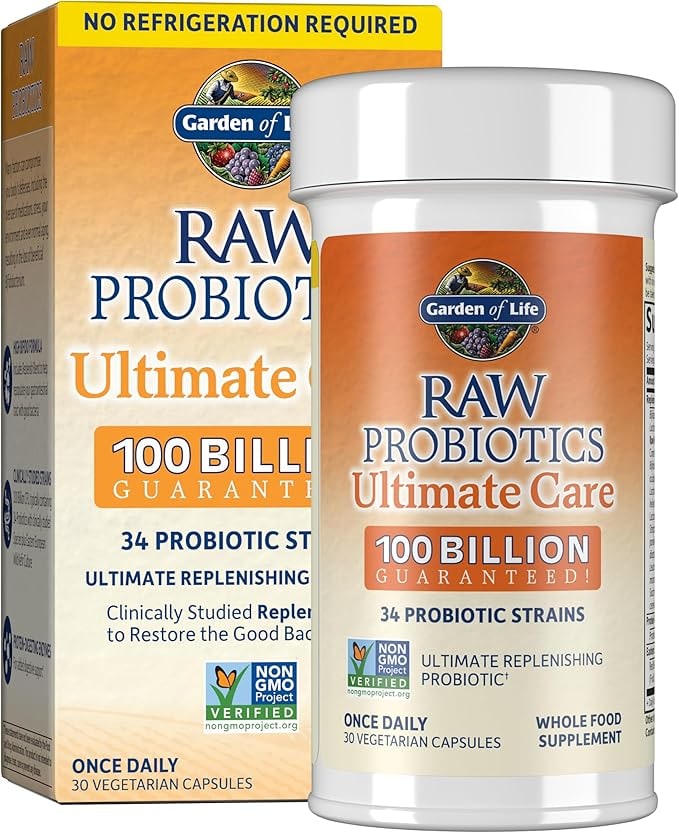
Garden of Life Raw Probiotics carries the highest labeled CFU count here (100 billion) and the most strains (34). The raw formula adds prebiotic fiber and digestive enzymes, so it is a complete gut package rather than bacteria alone. It needs refrigeration, which rules it out for travel. Best for a rough gut, or the aftermath of an antibiotic course.

Pros
100 billion CFU per capsule, the highest of the five
34 strains including Bulgarian + Lactobacillus
Raw, unprocessed - no fillers
Includes prebiotic fiber + digestive enzymes
Cons
Requires refrigeration
Premium price
Large capsule size
Where to buy
Amazon
Check Price
We may earn a commission from this link.
#4
Align Probiotic Supplement
Zoom
Align

Align Probiotic Supplement

9/10JellyReviews Score

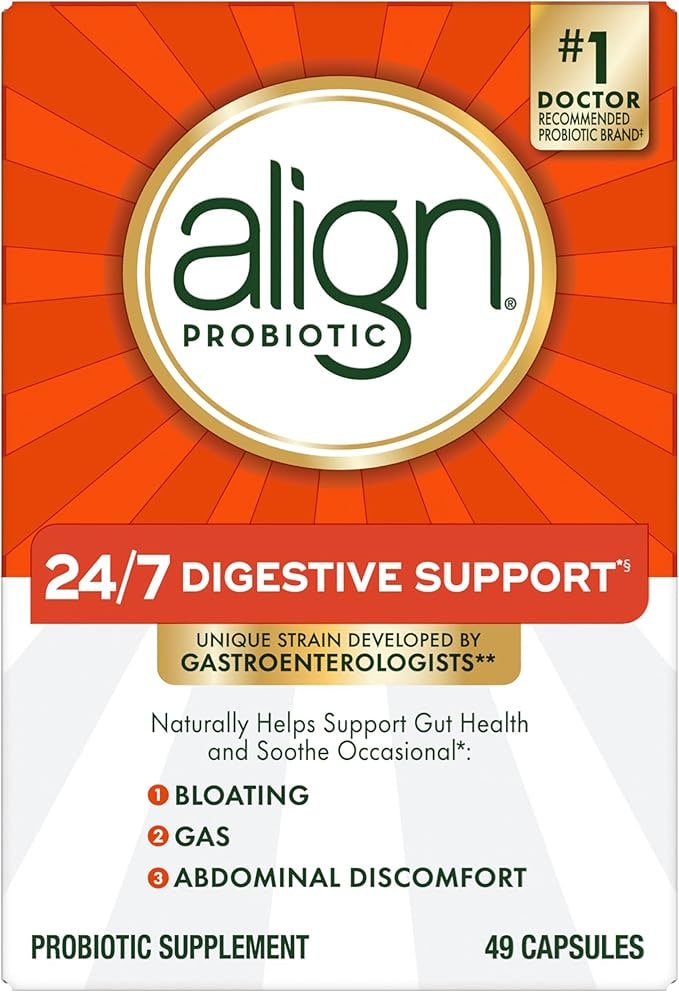
Align uses a proprietary Bifidobacterium strain (35624) that has been studied specifically for IBS, which is rare in this category. The low CFU count (1 billion) is deliberate, and CFU count is not what makes a probiotic work: the strain is. Best for IBS sufferers, and beside the point for general gut health.

Pros
Bifidobacterium longum subsp. infantis 35624 (proprietary)
Clinically studied for IBS symptom relief
No refrigeration needed
Gastroenterologist recommended
Cons
Single strain
Premium price
Only 1 billion CFU per capsule
Where to buy
Amazon
Check Price
We may earn a commission from this link.
#5
Hyperbiotics PRO-15
Zoom
Hyperbiotics

Hyperbiotics PRO-15

8.9/10JellyReviews Score

Hyperbiotics PRO-15 uses a time-release pearl that delivers probiotics over 8-10 hours - theoretically better survival than instant-release capsules. The pearl form is genuinely easier to swallow. Lower CFU (5 billion) but time-release makes it effective. Best for those who struggle with large capsules.

Pros
15 strains, 5 billion CFU per pearl
Time-release delivery (8-10 hours)
Pearl form - easy to swallow
No refrigeration required
Cons
Lower CFU than top picks
Time-release may be too slow
Premium price per CFU
Where to buy
Amazon
Check Price
We may earn a commission from this link.
§ 02 · Side-by-side comparison

Compare all 5 at a glance

RankProductBrandScoreBest for
#1Renew Life Ultimate Flora Extra CareRenew Life9.6EDITOR'S CHOICE
#2Culturelle Digestive Daily ProbioticCulturelle9.4MOST CLINICALLY STUDIED
#3Garden of Life Raw ProbioticsGarden of Life9.2-
#4Align Probiotic SupplementAlign9-
#5Hyperbiotics PRO-15Hyperbiotics8.9-
§ 03 · Buying guide

How to choose the right probiotic

01CFU count matters less than strain specificity

Marketing focuses on CFU (colony-forming units), but the right strain at lower CFU beats random strains at high CFU. Lactobacillus rhamnosus GG (Culturelle) has 1,000+ studies at 10 billion CFU. A 100 billion CFU product with unstudied strains may be less effective.

Look for products that name specific strains (e.g., "L. rhamnosus GG" not just "Lactobacillus"). Avoid products that list "proprietary blend" without strain names - you can't verify what's in them.

02Survival through stomach acid is non-negotiable

Probiotics must survive stomach acid (pH 1.5-3.5) to reach the intestines, and most of the CFUs printed on a label never get there. Survival is decided by the delivery, not the count. Look for: enteric-coated capsules, delayed-release capsules, or strains naturally acid-resistant (like L. rhamnosus GG).

Take probiotics with food - food buffers stomach acid and improves survival 30-50%. Avoid taking with hot liquids (kills live cultures).

03Refrigeration: myth vs reality

Most quality probiotics are freeze-dried and stable at room temperature for 12-24 months. Refrigeration extends shelf life but isn't strictly necessary for most modern products. Check the label - if it says "refrigerate after opening," do so. If not, room temperature is fine.

Avoid probiotics sold unrefrigerated in pharmacy aisles if the label says "keep refrigerated" - these may have lost potency during transport.

§ 04 · FAQ

Questions about probiotics

Yes, but timing matters. Take probiotics 2+ hours before or after antibiotics (antibiotics kill probiotics). Continue for 2-4 weeks after finishing the antibiotic course. Culturelle (L. rhamnosus GG) has the strongest evidence for preventing antibiotic-associated diarrhea - 65% reduction in meta-analyses. Saccharomyces boulardii (a beneficial yeast) is also effective and not killed by antibacterials.

Initial effects (less bloating, regular bowel movements) appear in 1-2 weeks. Significant changes in gut microbiome composition take 4-12 weeks of consistent use. If no improvement after 30 days, try a different strain combination - probiotics are strain-specific, not one-size-fits-all. Stop and consult a doctor if symptoms worsen.

Yes - fermented foods contain live cultures: yogurt (with active cultures), kefir, sauerkraut, kimchi, kombucha, miso, tempeh. A 2021 Stanford study found fermented foods increase microbiome diversity more effectively than probiotic supplements. However, food sources don't provide therapeutic doses for specific conditions. Best approach: eat fermented foods daily + supplement for targeted issues.

For most healthy adults, yes. Risk groups: immunocompromised (HIV, chemotherapy, transplant) should avoid probiotics (risk of infection). Critically ill ICU patients should not take probiotics. People with SIBO (small intestinal bacterial overgrowth) may worsen with probiotics. Pregnant/breastfeeding women: generally safe but consult OB. If you have a serious medical condition, talk to your doctor first.

The verdict

Renew Life Ultimate Flora remains our top pick for general gut health. The label lists 30 billion CFU across 12 strains, and the delayed-release capsule is built to get them past stomach acid. For antibiotic recovery, Culturelle (L. rhamnosus GG) is the most clinically backed. For IBS specifically, Align's proprietary Bifidobacterium strain is the targeted choice.

This page contains affiliate links. We may earn a commission when you click through and make a purchase. This never affects our rankings.