HomeCategoriesKitchenEspresso Machines
Kitchen · Cookware, appliances & gadgets

The best espresso machines of 2026

The best espresso machines, ranked on how much of each machine its maker will state as a number rather than a name.

PID, thermoblock, commercial grade: every listing here is full of phrases like these, and only some of them arrive with a figure attached. So we read all five side by side and recorded what each maker commits to. Breville prints a temperature tolerance on one machine and only the label on the other. Rancilio spends five feature bullets without naming a pressure, a portafilter diameter or a temperature control. Be warned that this axis is decisive at the top and close in the middle: one machine states clearly more than the rest, and the next three state roughly as much as each other, so we break that tie on how much of the work the machine does for you. Every figure below is the manufacturer's own, taken from the listing for the exact model we link to, and where a listing disagrees with itself we say so.

Last updated
July 28, 2026
How we rank: the specs each maker publishes, read across the listing's own surfaces, and the third-party register where the category has one.
§ 01 · Top 5 Rankings

Our top 5 picks for espresso machines

As an Amazon Associate I earn from qualifying purchases.

#1
EDITOR'S CHOICE
Breville Barista Pro (BES878BSS)
Zoom
Breville

Breville Barista Pro (BES878BSS)

9.4/10JellyReviews Score

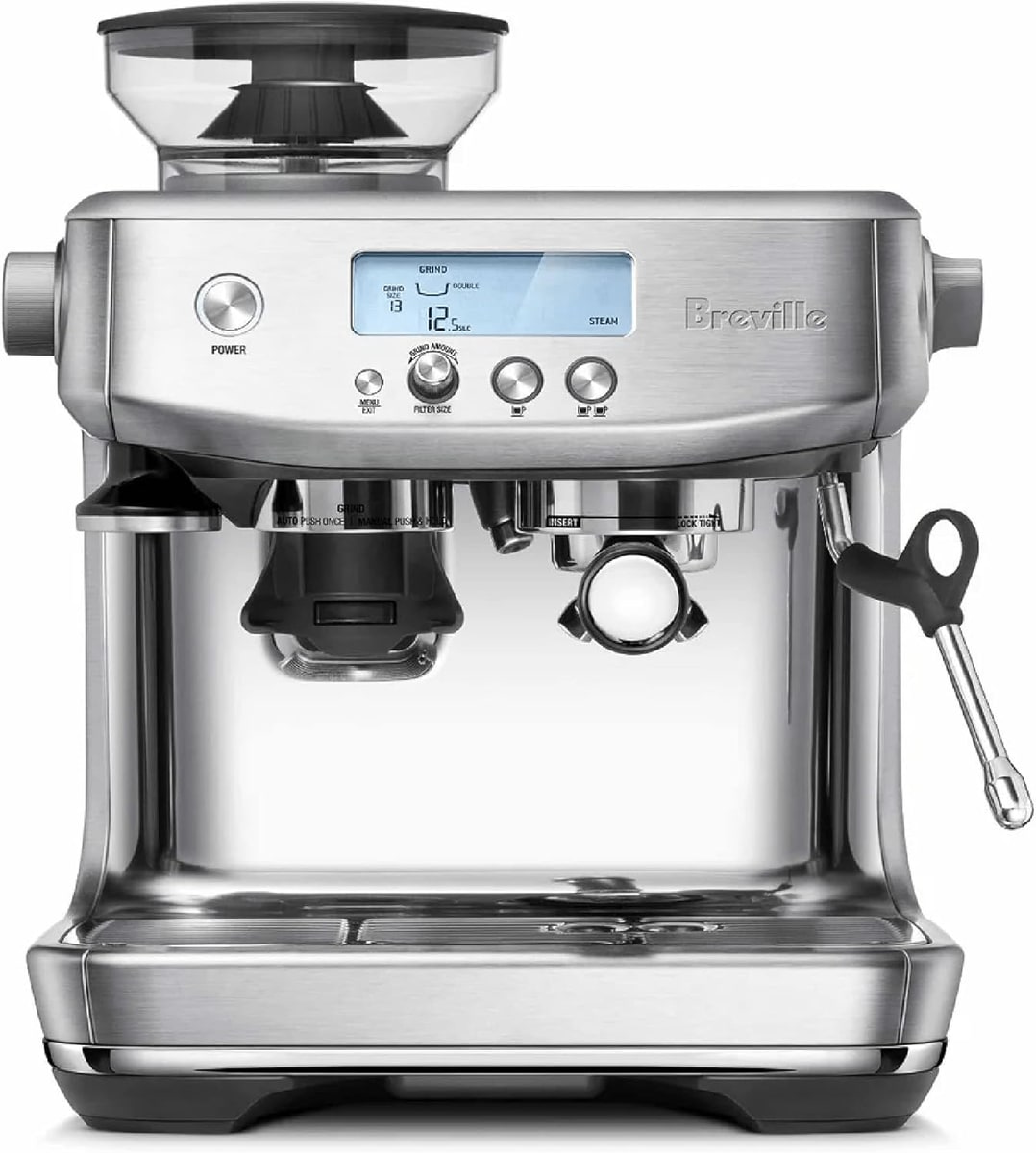
Buy this one if you want the fewest unknowns. It is the only machine on this page whose listing states a temperature tolerance rather than just the letters PID: Breville prints plus or minus 2°C. ThermoJet reaches the optimum extraction temperature in a stated 3 seconds, the conical burr grinder is built in, and the listing prints a 9 bar extraction pressure, which is a brew figure rather than a pump rating. Two things to know before you buy. The portafilter is 54mm, so baskets and tampers come from a smaller pool than the 58mm commercial size. And it lists both dual wall and single wall filters, which matters more than it sounds: a dual wall basket makes crema by forcing water through a small hole, so it flatters a bad grind and caps what the machine can do.
Pros
The only listing here that puts a number on its temperature control: Breville prints digital temperature control (PID) at plus or minus 2°C
ThermoJet heating, which Breville states reaches the optimum extraction temperature in 3 seconds
One of only two machines here whose listing prints a brew pressure, and it prints 9 bar rather than a pump rating
Stainless steel dual wall and single wall filters are both listed, so it is not locked to pressurized crema
Cons
54mm portafilter, not the 58mm commercial size the Gaggia here uses
The listing prints no grind setting count for it, where the Barista Express listing prints 16
The grinder is built in, so a grinder fault and a machine fault are the same repair
Where to buy
Amazon
Check Price
We may earn a commission from this link.
#2
16 GRIND SETTINGS
Breville Barista Express (BES870XL)
Zoom
Breville

Breville Barista Express (BES870XL)

9.2/10JellyReviews Score

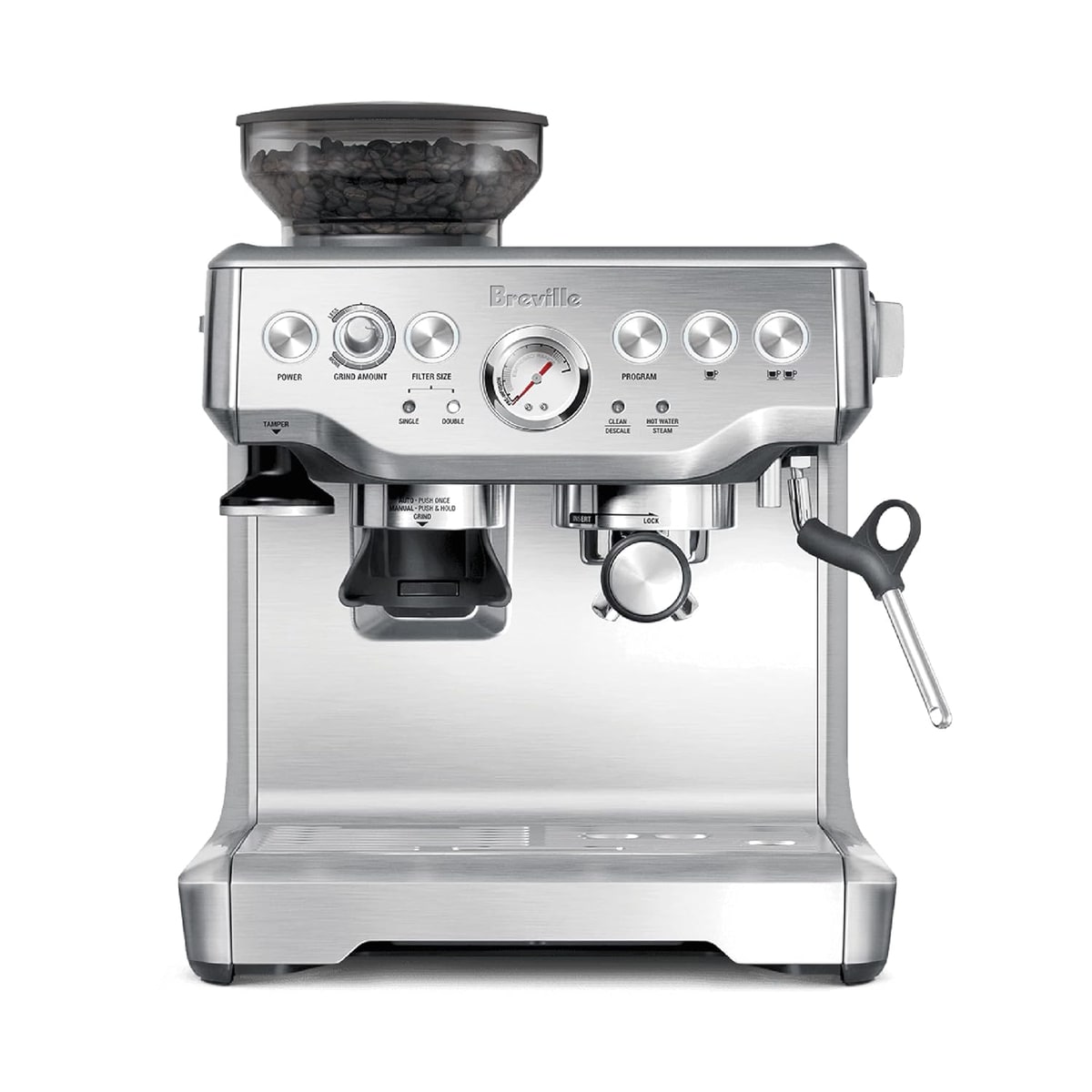
This is the machine most people mean when they say they bought a Breville, and the gap between it and the one above is written in what each listing will commit to. Same grinder, same 54mm portafilter, same 18g dose, same pair of dual wall and single wall filters, same three letters PID. What this listing does not carry is a tolerance on that PID, a heat up time, or a brew pressure, and the Barista Pro listing carries all three. It does win one number outright: it prints 16 precision grind settings, and the Barista Pro listing prints no grind count at all.

Pros
16 precision grind settings, a count the Barista Pro listing does not give at all
The same integrated conical burr grinder, the same 54mm portafilter and the same 18g dose as the Barista Pro
Stainless steel dual wall and single wall filters, the same pair the Barista Pro lists
Digital temperature control, which Breville labels PID on the listing
Cons
Breville names PID here but attaches no tolerance to it, where the Barista Pro listing prints plus or minus 2°C
Thermocoil rather than the Pro's ThermoJet, and this listing gives no heat up time
No brew pressure anywhere on the listing, where the Barista Pro prints 9 bar
Where to buy
Amazon
Check Price
We may earn a commission from this link.
#3
ENTHUSIAST PICK
Gaggia Classic Pro E24 (RI9380/46)
Zoom
Gaggia

Gaggia Classic Pro E24 (RI9380/46)

9/10JellyReviews Score

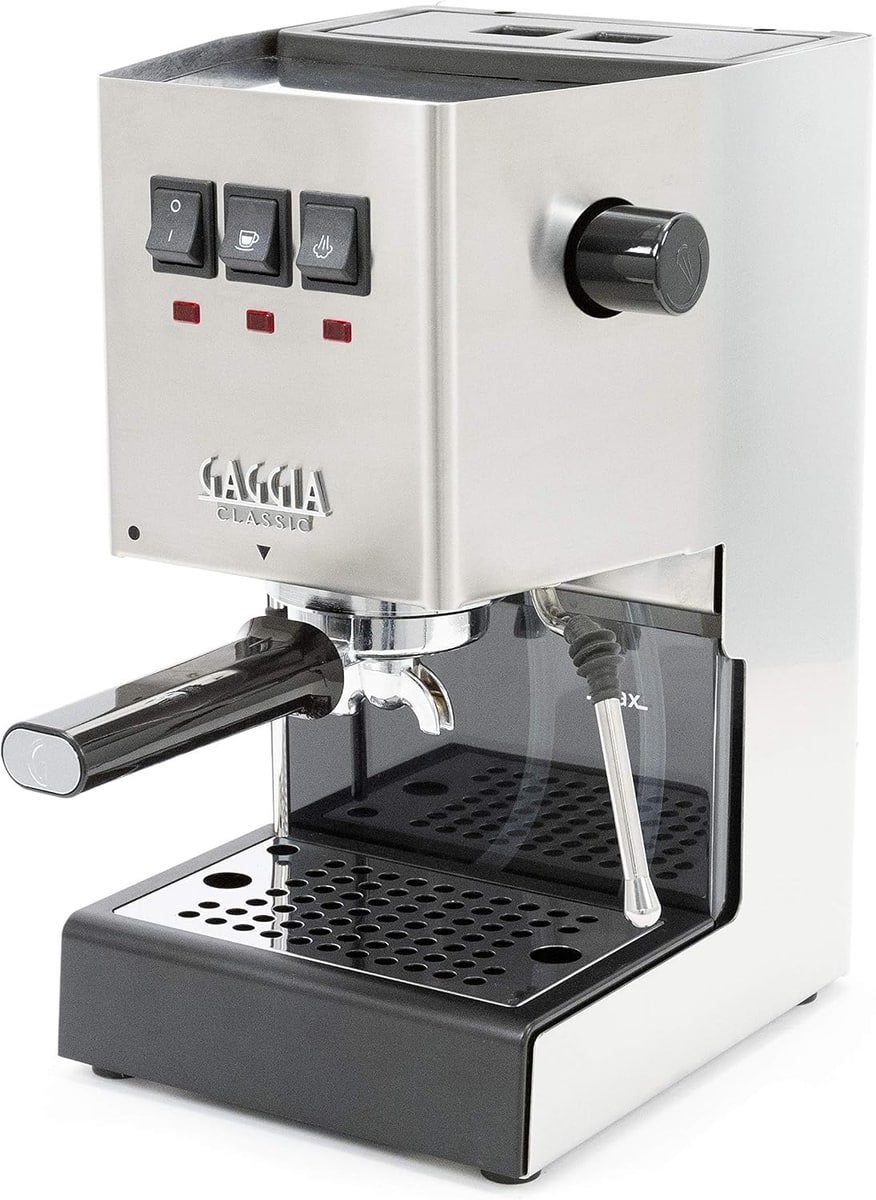
This is the machine that gives the category away. Gaggia advertises 9 Bar Espresso Extractions in its feature bullets and advertises no pump rating at all, so the number it leads with is the number at the coffee. Beyond that the hardware is unusually specific for a listing this short: a stainless steel 58mm commercial portafilter, a commercial three way solenoid valve that releases pressure off the puck when the shot stops, solid steel housing, made in Italy. What you give up is convenience and information. There is no grinder, nothing is automated, and the five features Gaggia lists do not include temperature control of any kind.

Pros
Gaggia advertises 9 Bar Espresso Extractions in its own feature bullets, and advertises no pump rating at all
58mm commercial portafilter in stainless steel, the size cafe equipment uses
Commercial three way solenoid valve, which drops the pressure off the puck when the shot ends
Solid steel housing, made in Italy, both stated by Gaggia
Cons
No grinder, so a separate one is a second purchase rather than an optional extra
Gaggia lists five features on this machine and temperature control is not one of them
Nothing is automated for you, so the grind, the dose and the tamp are all yours to get right
The listing gives a 2.1 liter capacity and no temperature figure of any kind
Where to buy
Amazon
Check Price
We may earn a commission from this link.
#4
ONE TOUCH
De'Longhi Magnifica Evo with Manual Frother (ECAM29043SB)
Zoom
De'Longhi

De'Longhi Magnifica Evo with Manual Frother (ECAM29043SB)

8.6/10JellyReviews Score

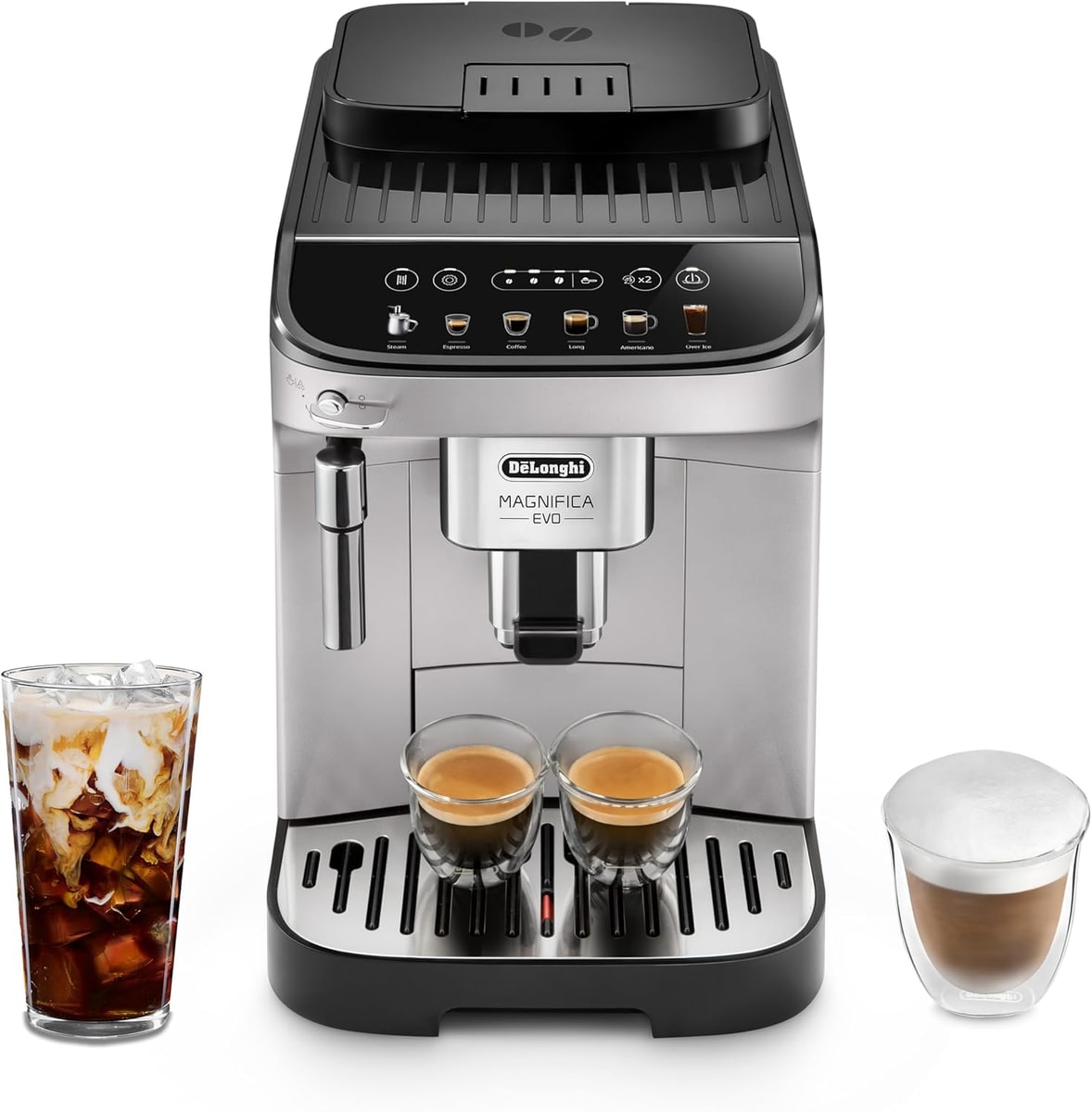
This is the convenience machine, and it is here partly to correct something. It is often written up as having no steam wand, only an automatic frother. That is wrong for this model: De'Longhi sells it specifically as the Manual Milk Frother version and describes the frother as preparing perfectly textured foam with milk and milk alternatives, so you texture the milk yourself. What it does not have is a portafilter. The brewing unit is sealed, which is exactly what makes it a one-button machine and exactly what stops you correcting a shot. Count the recipes yourself before you believe the box: the title says seven, the specification says five and then lists five.

Pros
Bean to cup: the conical burr grinder has 13 settings and doses itself
A manual frother, which De'Longhi says prepares perfectly textured foam with milk and milk alternatives
Removable and dishwasher safe parts, stated on the listing
It names its five drinks rather than counting them: espresso, coffee, americano, iced coffee and long
Cons
The listing cannot agree with itself: the title says 7 one-touch recipes, the bullet says 5 and then names them
No portafilter at all. The brewing unit is sealed, so the puck cannot be weighed, tamped or inspected
The listing gives no pressure figure of any kind for it
The grind, the dose and the tamp are the machine's decisions, not yours
Where to buy
Amazon
Check Price
We may earn a commission from this link.
#5
Rancilio Silvia
Zoom
Rancilio

Rancilio Silvia

8.4/10JellyReviews Score

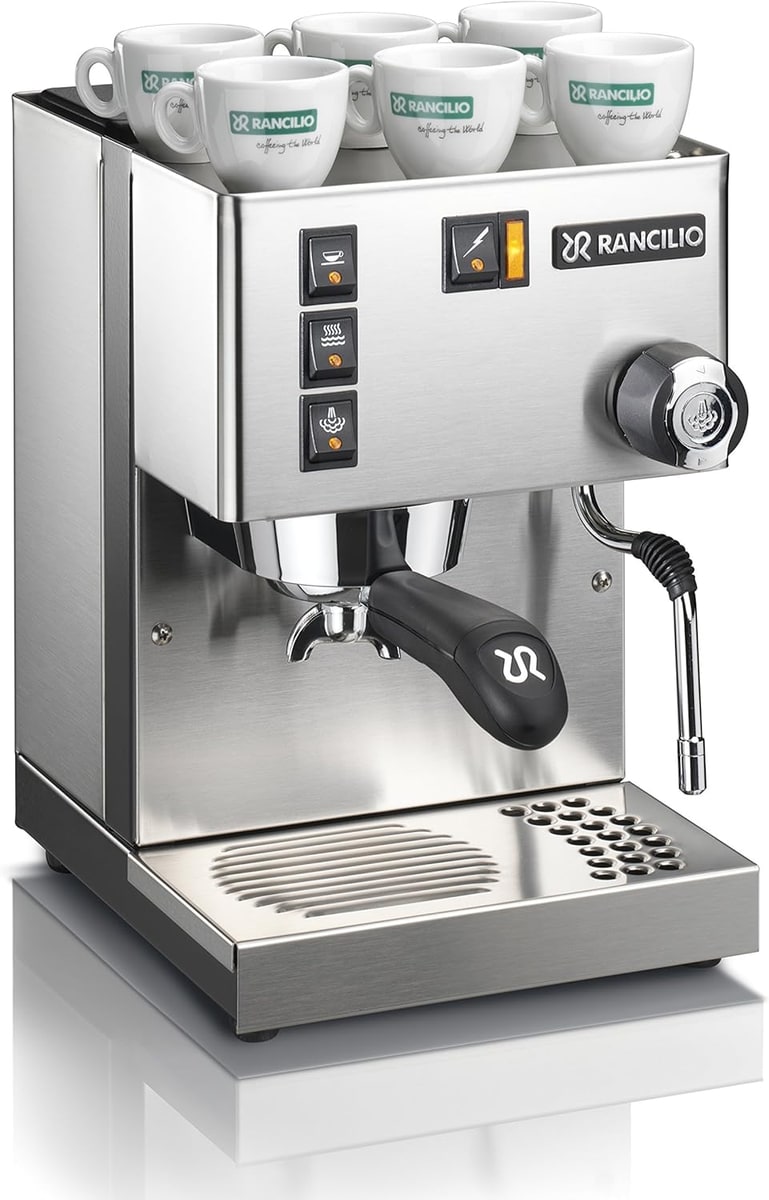
The most physical machine here and the least forthcoming listing. It is built on an iron frame with stainless steel side panels, and the commercial grade group head and the articulating steam wand are the parts people buy it for. The problem is what the listing will not say. Five feature bullets, and none of them states a brew pressure, a portafilter diameter or anything about temperature control. It also disagrees with itself on the one thing it does describe at length: the bullets give you a manual steam wand with a professional knob that controls steaming pressure, and the Special Feature field says Automatic Milk Foam. Those cannot both be the machine. The title carries 0.3 liters and does not say of what, which on a single group machine is exactly the figure that decides whether steaming after brewing means waiting.

Pros
A commercial grade group head, which Rancilio ties directly to heat stability and extraction quality
The articulating steam wand offers a complete range of motion, and the steaming knob is a valve you turn rather than a button
Iron frame with stainless steel side panels, stated in the listing title
The porta filter handle is the same design Rancilio puts on its commercial machines
Cons
Rancilio lists five features here and not one of them gives a brew pressure, a portafilter diameter or a temperature control
The title gives 0.3 liters without saying of what, which on a machine like this is the one number a buyer would want labeled
The listing contradicts itself: the bullets describe a manual articulating steam wand and a knob you turn, while the Special Feature field reads Automatic Milk Foam
No grinder, so a separate one is a real cost on top
Where to buy
Amazon
Check Price
We may earn a commission from this link.
§ 02 · Side-by-side comparison

Compare all 5 at a glance

RankProductBrandScoreBest for
#1Breville Barista Pro (BES878BSS)Breville9.4EDITOR'S CHOICE
#2Breville Barista Express (BES870XL)Breville9.216 GRIND SETTINGS
#3Gaggia Classic Pro E24 (RI9380/46)Gaggia9ENTHUSIAST PICK
#4De'Longhi Magnifica Evo with Manual Frother (ECAM29043SB)De'Longhi8.6ONE TOUCH
#5Rancilio SilviaRancilio8.4-
§ 03 · Buying guide

How to choose the right espresso machine

01The bar number on the box is the pump, not the coffee

Espresso machines are widely advertised on a bar rating, usually 15, sometimes 19 or 20. That figure is the maximum static rating of the vibratory pump inside. It is not the pressure the water reaches the coffee at. Espresso is pulled at roughly 9 bar, and a machine with a 15 bar pump gets there through an over pressure valve that bleeds the surplus away before it reaches the puck.

Here is what makes that concrete, and it is not what the shelf talk would lead you to expect. Only two of the five listings on this page print a pressure figure at all, and both of them print 9, not 15. The Barista Pro listing says "Low pressure pre-infusion followed by a high pressure 9 bar extraction" and gives "9 Bar Extraction Pressure" in its feature strip. Gaggia advertises "9 Bar Espresso Extractions" and gives no pump rating whatsoever. The other three print no bar figure of any kind. The 15 bar number for the Barista Pro is not on its Amazon listing at all: it is on breville.com, where the BES878 page lists a "15 bar Italian Pump" and, separately, "Low pressure pre-infusion followed by 9 bar extraction". One machine, both numbers, two different places, and only the smaller one describes the coffee.

So when a shop compares a 15 bar machine with a 9 bar machine, it is usually comparing a pump rating with a brew pressure and letting you conclude that the bigger number wins. It is the same move as reading the ASHRAE figure on an air conditioner instead of the SACC one. Worth knowing before the number does any work in your decision.

02A dual wall basket makes crema out of geometry, not coffee

Machines like these ship two kinds of filter basket, and the difference decides what the machine can do. A single wall, or non pressurized, basket is a plain mesh: the water has to find its way through the coffee, so the grind and the tamp are what produce the resistance and the crema. A dual wall, or pressurized, basket has a second floor with one small hole in it, and forces the flow through that hole. Crema comes out either way.

That is the point of it. A dual wall basket makes a good looking shot from a bad grind, which is why beginner machines ship with them and why a machine can look impressive on day one and stop improving. It puts a ceiling on the result, because nothing you change about the coffee makes much difference once the hole is doing the work.

Both Brevilles here list "Stainless Steel Dual and Single Wall Filters", so you get both in the box. That is worth more than it reads: the machine will grow with you rather than flattering you forever. Start on the dual wall, move to the single wall when you have a grinder you trust.

03Count what the listing leaves out, not just what it claims

Read these five listings side by side and the interesting thing is the omissions. Gaggia gives you five bullets and spends every one of them on hardware: a solid steel housing made in Italy, 9 bar espresso extractions, a stainless steel 58mm commercial portafilter, a commercial three way solenoid valve and a commercial steam wand. Rancilio also gives you five, and between them they state no pressure figure, no portafilter diameter and nothing about temperature control, on the machine that leans hardest on the word commercial.

Breville sits in the middle in an instructive way, because it is the same maker describing two machines of the same design. It prints the letters PID on both and a tolerance, plus or minus 2°C, on only one. It prints a 3 second heat up time on the Barista Pro and no heat up time on the Barista Express. It prints 9 bar on the Pro and no pressure at all on the Express. And it prints 16 grind settings on the Express and no grind count on the Pro. Every one of those gaps is a decision somebody made.

One thing is missing from all five, which is worth knowing before you try to compare them on it: not one of these listings states a warranty term in years. None of this proves a machine is bad, and a missing number is not a defect. But it is the difference between buying something you can compare and buying something you have to trust.

§ 04 · FAQ

Questions about espresso machines

Usually you are not comparing like with like. The 15 is a pump rating and the 9 is a brew pressure, and espresso is pulled at roughly 9 bar either way. You can see both numbers attached to one machine: breville.com lists a 15 bar Italian pump for the Barista Pro and, separately, low pressure pre-infusion followed by 9 bar extraction, while the Amazon listing for the same machine prints only the 9. Gaggia advertises 9 Bar Espresso Extractions and gives no pump figure at all. The other three listings on this page print no pressure of any kind. So a bigger bar number tells you about the pump that was fitted, not about the coffee. What decides the shot is the grind, the dose and the basket, and only one of those comes with the machine.

It depends on whether you want one appliance or two. Both Brevilles and the De'Longhi grind their own beans; the De'Longhi gives 13 grind settings and the Breville pair use an integrated conical burr with dose control. The Gaggia and the Rancilio have no grinder, so a separate one is a real cost on top rather than an optional extra. The trade is repairability against counter space: an integrated grinder is one less machine and one more thing inside the machine that can fail, and a separate grinder can be upgraded on its own while the espresso machine stays.

It is the diameter of the portafilter, and it decides what accessories fit. Both Brevilles here state 54mm, which is Breville's own size. The Gaggia states a stainless steel 58mm commercial portafilter, which is what commercial machines use, so bottomless portafilters, precision baskets, tampers and distribution tools are made for it by everybody. The Rancilio publishes no diameter at all, which is its own answer to this question and worth settling with the seller first. Nothing about 54mm makes a worse shot. It makes a smaller catalog. If you expect to buy a bottomless portafilter and a precision basket at some point, that matters; if you expect to use the machine as it comes, it does not.

You cannot tell from the listings, and that is the useful answer. We read all five and not one of them states a term in years. Three of them answer the question with the same line, that for warranty information about this product you should click here, and on the Gaggia and the Rancilio that link is a PDF. The other two show no warranty line at all in the product detail sections. So if the length of cover matters to your decision, it cannot be settled on the product page. Open the linked document before you buy, check whether it covers parts only or parts and labor, and check who performs the repair, because on a machine with a boiler and a pump that last question is the one that decides how much a fault costs you.

The verdict

Count what each listing commits to and the page orders itself. The Breville Barista Pro takes the top slot because it is the only one here that attaches a number to its temperature control, plus or minus 2°C, and it backs that with a stated 3 second heat up, a 9 bar extraction pressure, a built-in grinder and both kinds of filter. Ranks two, three and four are close on that axis, so be clear about what separates them. The Barista Express is the same design as the Pro described with fewer numbers: the same PID letters with no tolerance, no heat up time and no pressure, though it does print 16 grind settings where the Pro prints none. It sits second because it grinds and doses for you, not because it publishes more. The Gaggia Classic Pro publishes the most specific hardware description on the page, and prints a brew pressure the Express does not, so if published detail is all you care about it deserves second place; it is third here because it has no grinder and automates nothing, which is also exactly why it is the one to buy if you want to learn the craft. The De'Longhi is the one touch machine and is worth defending, because it is routinely written up as lacking a steam wand when this version is sold specifically with a manual frother; just count its recipes yourself, because the title says seven and the listing says five twice. And the Rancilio leans hardest on the word commercial while publishing the thinnest set of numbers on the page, and it is the one listing that disagrees with itself about whether its milk frothing is manual or automatic.

This page contains affiliate links. We may earn a commission when you click through and make a purchase. This never affects our rankings. Read full disclosure →