Kitchen · Cookware, appliances & gadgets

The best chef knives of 2026

The best chef's knives, ranked on the steel, the edge angle and the weight each maker will actually put in writing.

Every number below is the maker's own, and where a maker does not publish one we have left it out rather than guess. Read the dishwasher section before you buy: Victorinox says its knife is dishwasher safe and Mercer says in plain words not to put its knife in one, and they are both right, for reasons that tell you most of what you need to know about knives.

Last updated
July 14, 2026
How we rank: published specs, third-party certifications, and what verified buyers report.
§ 01 · Top 5 Rankings

Our top 5 picks for chef knives

As an Amazon Associate I earn from qualifying purchases.

#1
EDITOR'S CHOICE
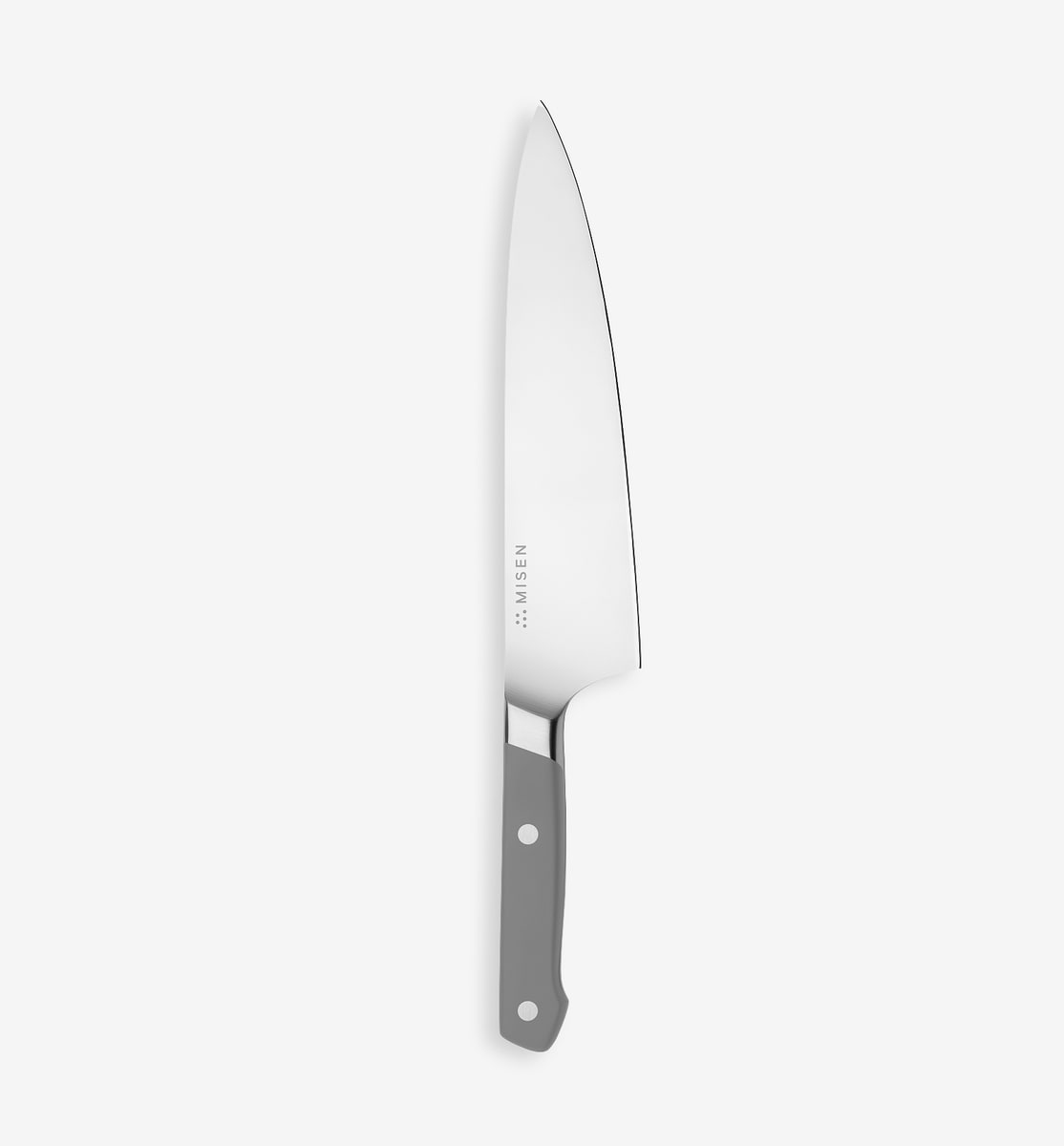
Misen 8" Chef Knife
Zoom
Misen

Misen 8" Chef Knife

9.5/10JellyReviews Score

The Misen is the knife to buy if you want most of a Shun for a lot less. Misen upgraded this blade to AUS-10, which is the harder, higher-carbon cousin of the AUS-8 that most knives at this price use, and it publishes that on the listing. The sloped bolster is the detail worth knowing: a full bolster, like the Wusthof's, puts steel in front of the heel of the blade, and that steel is what stops you sharpening the last inch of the edge. Misen slopes it away instead. What Misen will not tell you is the hardness or the edge angle, and it is the only maker here that withholds both.

Pros
AUS-10 high-carbon Japanese stainless steel, a step up from the AUS-8 used at this price
Misen puts a sloped bolster on it, so you get the finger guard without the lump that stops you sharpening the heel
POM handle, contoured for a pinch grip and grippy when wet
Sold on Amazon by Misen itself, which is not true of most direct-to-consumer knife brands
Cons
Misen does not publish a Rockwell hardness or an edge angle anywhere on this listing, so the two numbers a knife buyer most wants are the two you cannot check
POM is a plastic. It is a good plastic, and it is not the pakkawood or the riveted handle you get one rank down
High-carbon steel: dry it. Misen makes no dishwasher claim, and the absence of one is the answer
Where to buy
Amazon
Check Price
We may earn a commission from this link.
#2
SHARPEST GEOMETRY
Shun Classic 8" Chef's Knife
Zoom
Shun

Shun Classic 8" Chef's Knife

9.3/10JellyReviews Score

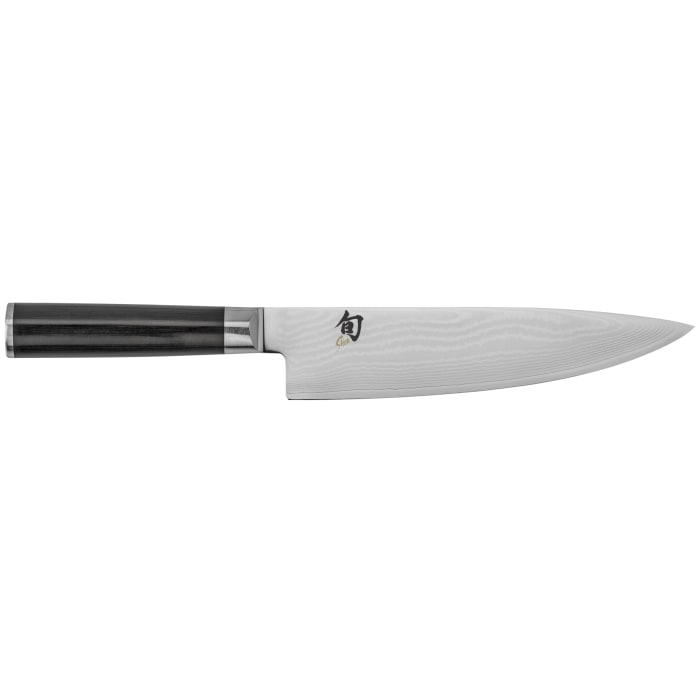
The Shun is the one to buy if you are going to look after a knife. Shun is the only maker on this page that publishes an edge angle, 16 degrees, and that single number is why the knife feels different from the German and Swiss blades here: it is ground thinner, so it parts food instead of wedging it. The VG-MAX core is clad in 68 layers of Damascus, which is partly decorative and partly a soft jacket around a hard core. The free sharpening for life is a genuinely good deal and also a hint: a 16-degree edge is a commitment.

Pros
Shun publishes the edge angle: 16 degrees. It is the only maker here that does
VG-MAX core with 68 layers of Damascus cladding, and Shun states both
D-shaped pakkawood handle, which Shun says works for left and right-handed users
Shun includes free sharpening and honing, for the life of the knife
Handcrafted in Japan
Cons
The hardest, thinnest edge here is also the most chippable. This is not the knife for bones, frozen food, or a hard winter squash
A 16-degree edge wants a whetstone, not the pull-through sharpener in your drawer
The most expensive of the five, and the free sharpening exists partly because you will need it
Where to buy
Amazon
Check Price
We may earn a commission from this link.
#3
Wüsthof Classic 8" Chef's Knife
Zoom
Wüsthof

Wüsthof Classic 8" Chef's Knife

9.2/10JellyReviews Score

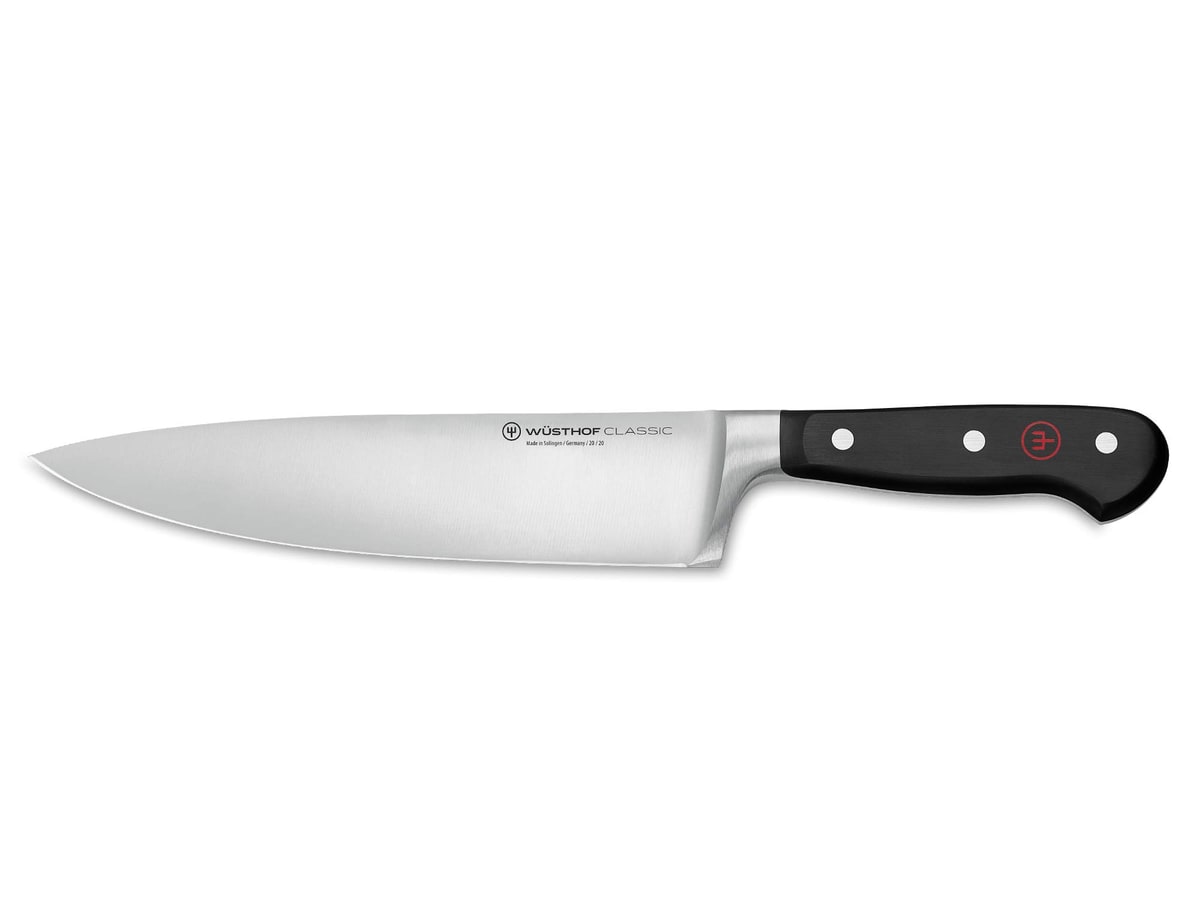
The Wusthof is the knife to buy once and stop thinking about. It is the only one here that publishes both a hardness and a weight: 58 HRC, 8.5 oz. 58 HRC is deliberately softer than a Japanese blade, which is the trade: it will not take as fine an edge as the Shun, and it will not chip when it meets a chicken bone. Note what the marketing claim actually says. "20% sharper with twice the edge retention" is measured against previous Wusthof models. It is a real claim and it is a claim about Wusthof, not about the Shun.

Pros
Wüsthof publishes the hardness: high-carbon stainless tempered to 58 HRC
It publishes the weight too, 8.5 oz, with an 8" blade and a 5" handle
Full tang, triple-riveted, full bolster and a finger guard
Wüsthof says its Precision Edge Technology makes the blade 20% sharper with twice the edge retention of its previous models
Made in Solingen. Wüsthof has been family owned for seven generations
Cons
The heaviest knife here at 8.5 oz, and Wüsthof publishes that figure itself
That full bolster runs steel all the way down to the heel, which is what makes the knife feel solid and what makes the last inch of edge awkward to sharpen
Wüsthof's "20% sharper" and "twice the edge retention" are measured against its own older knives, not against anything on this page
Where to buy
Amazon
Check Price
We may earn a commission from this link.
#4
Mercer Culinary Genesis 8" Chef's Knife (M20608)
Zoom
Mercer Culinary

Mercer Culinary Genesis 8" Chef's Knife (M20608)

9/10JellyReviews Score

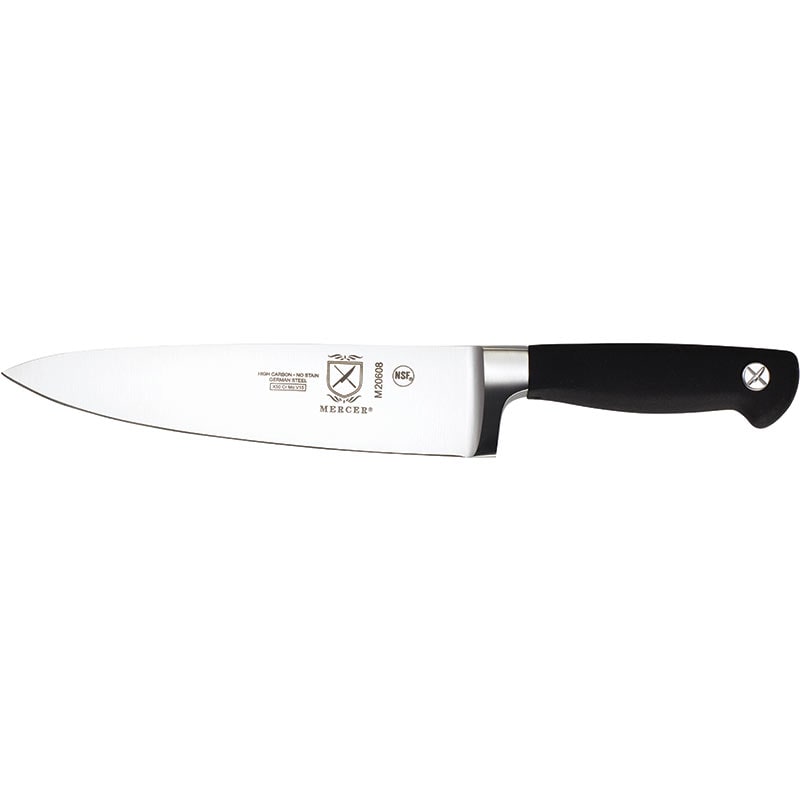
The Mercer Genesis is the professional's cheap knife, and it is the one culinary schools put in students' hands. It is precision-forged from high-carbon German steel with a taper-ground edge, which is the same recipe as the Wusthof at a small fraction of the outlay. The interesting thing about it sits in its care instructions: Mercer explicitly tells you not to put it in the dishwasher. Victorinox, one rank down, explicitly says you can. Both are being honest, and the difference is the handle and the finish, not the steel.

Pros
Precision-forged from high-carbon German steel, with a taper-ground edge, per Mercer
The knife culinary schools hand to students, and it costs a fraction of the Wüsthof it is modelled on
Ergonomic non-slip handle that Mercer says holds even with wet hands
Mercer tells you plainly how to look after it, which is more than most makers bother with
Cons
Mercer says: "Do not place in dishwasher or submerge for long periods of time." That is its own instruction, and it is the opposite of what Victorinox says about the knife one rank below
Mercer publishes no hardness, no edge angle and no weight on this listing
German steel and a forged bolster mean a heavier knife than the Swiss or Japanese blades here, though Mercer does not say how much heavier
Where to buy
Amazon
Check Price
We may earn a commission from this link.
#5
BEST BUDGET
Victorinox Fibrox Pro 8" Chef's Knife
Zoom
Victorinox

Victorinox Fibrox Pro 8" Chef's Knife

8.9/10JellyReviews Score

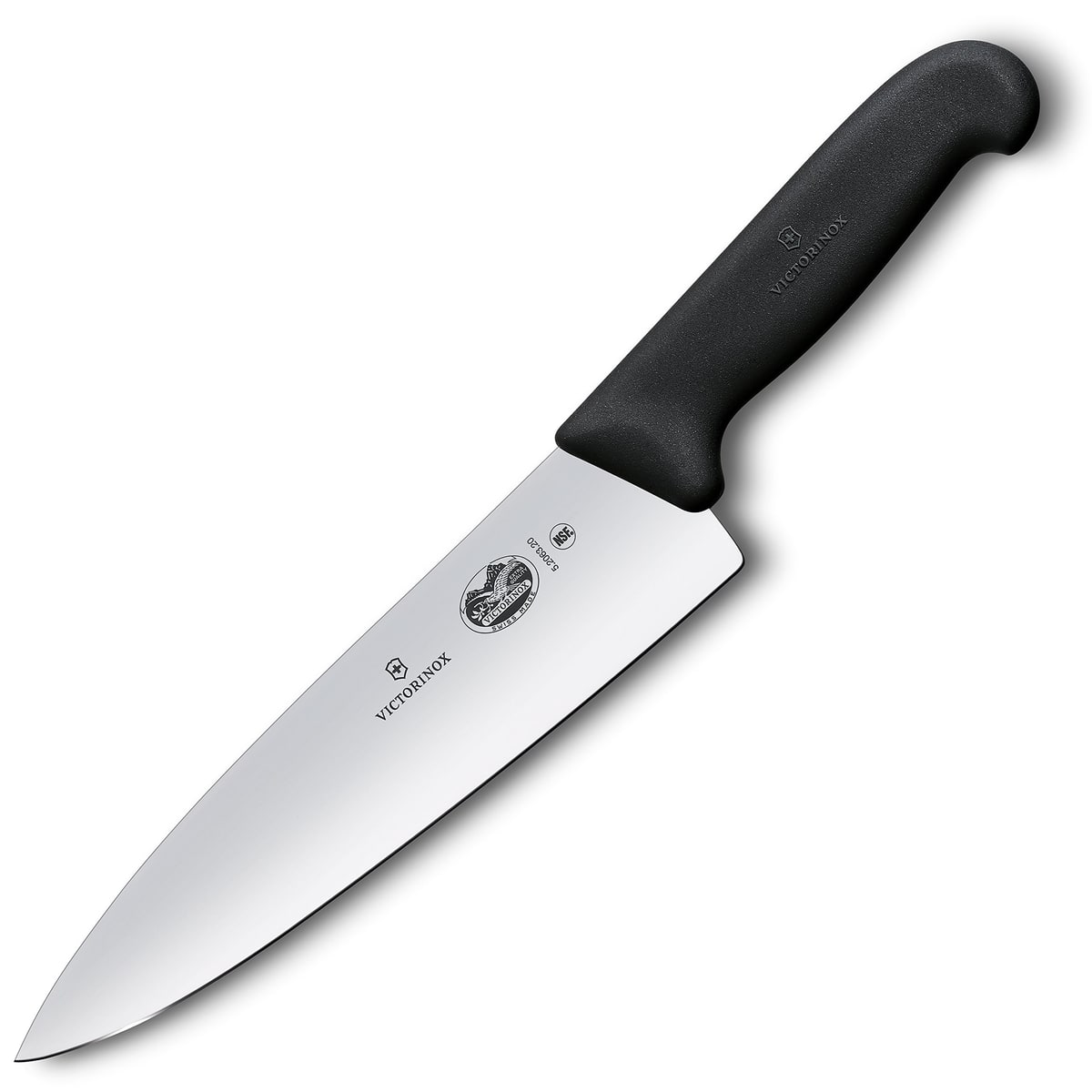
The Victorinox is the correct first chef's knife and it is also the knife most professional kitchens actually use. It is stamped rather than forged, which means no bolster, no full tang, and a much lower price. The TPE handle grips when wet, which is the whole reason it took over commercial kitchens. And it is the only knife on this page whose maker will put "dishwasher safe" in writing. Read that next to Mercer, one rank above, which tells you in its own words not to. If you want one knife and you do not want to think about it, buy this.

Pros
Victorinox says it is dishwasher safe, in writing, and it is the only knife here that does
TPE handle, non-slip even when wet, which is why it is the standard knife in commercial kitchens
Victorinox gives a lifetime guarantee against defects in material and workmanship
The cheapest of the five, and Amazon's best seller in chef's knives
Swiss made, and the blade is laser-tested per Victorinox
Cons
The blade is 7.9 inches, not 8. Victorinox publishes that itself, and nobody else on this page is that precise
Stamped, not forged. There is no bolster and no full tang, which is why it costs what it costs
Victorinox publishes no hardness figure. Its edge is softer than the Shun's and you will hone it more often, but the number to prove that is not on the listing, so we are not printing one
Where to buy
Amazon
Check Price
We may earn a commission from this link.
§ 02 · Side-by-side comparison

Compare all 5 at a glance

RankProductBrandScoreBest for
#1Misen 8" Chef KnifeMisen9.5EDITOR'S CHOICE
#2Shun Classic 8" Chef's KnifeShun9.3SHARPEST GEOMETRY
#3Wüsthof Classic 8" Chef's KnifeWüsthof9.2-
#4Mercer Culinary Genesis 8" Chef's Knife (M20608)Mercer Culinary9-
#5Victorinox Fibrox Pro 8" Chef's KnifeVictorinox8.9BEST BUDGET
§ 03 · Buying guide

How to choose the right chef knive

01Read this first: two makers on this page disagree about the dishwasher, and both are right

Victorinox states that its Fibrox Pro is dishwasher safe. Mercer states, in its own care instructions, "Do not place in dishwasher or submerge for long periods of time." Same job, same price bracket, opposite advice. The difference is not the steel, it is the construction. The Victorinox is stamped, with a moulded TPE handle and nothing for water to get into. The Mercer is forged, with a fitted handle and a bolster, and a dishwasher cycle attacks exactly those joins.

So the rule is not "never" and it is not "always". It is: do what the maker of your knife says, and understand that a knife you can put in a dishwasher is a knife built to be replaceable rather than kept. If a maker is silent on the question, as Misen and Shun are, treat the silence as a no.

02Hardness and edge angle are the two numbers that matter, and most makers hide them

Hardness (HRC) says how long an edge lasts and how easily it chips. Edge angle says how sharp the blade can get. They pull against each other: a harder steel can hold a thinner angle, and a thinner angle chips sooner. That is the entire trade-off, and everything else is handle preference.

Now look at what these five makers will actually tell you. Wüsthof publishes a hardness: 58 HRC. Shun publishes an angle: 16 degrees. Nobody on this page publishes both, and Misen, Mercer and Victorinox publish neither. That is not a small thing. It means that for three of the five knives here, the two specifications that determine how the knife behaves are simply not available, from anyone, and any site that prints them for you has got them from somewhere other than the maker.

03Forged or stamped, bolster or no bolster

A forged knife is hammered from one bar of steel, usually has a bolster (the collar between blade and handle), and is heavier. A stamped knife is cut from a sheet, has no bolster, and is lighter and cheaper. The Wüsthof and the Mercer are forged. The Victorinox is stamped.

The bolster is the part nobody explains. It is a finger guard, and it makes the knife feel substantial. It is also steel sitting in front of the heel of the blade, and that steel is what prevents you sharpening the last inch of your edge, for the life of the knife. Misen's answer is a sloped bolster, which gives you the guard and gets out of the way of the stone. It is the most thoughtful piece of design on this page.

§ 04 · FAQ

Questions about chef knives

They are not the same thing and the distinction saves you money. Honing pushes a rolled edge back into line with a steel rod; it removes almost no metal and you can do it often. Sharpening grinds a new edge and removes metal permanently, which is why a knife that is sharpened constantly gets narrower over the years. Hone first. Sharpen only when honing stops bringing the edge back. Shun includes free sharpening and honing for the life of its knife, which is worth reading as a hint about how often a 16-degree edge needs it.

Because Victorinox measured it and published the number. "8 inch" is a size class, not a measurement, and most makers round to it without ever saying what the blade actually is. Victorinox states 7.9 inches on its own listing. It is a trivial difference in the kitchen and a useful signal about the maker: a company that publishes 7.9 rather than rounding to 8 is a company telling you the truth about the small things.

They are built for different failures. The Shun is ground to 16 degrees and will take a finer edge than anything else here, and it will chip if it meets a bone or a frozen edge. The Wusthof is tempered to 58 HRC, which is deliberately softer, and it will not take as fine an edge and will not chip either. Neither is better. If you cook carefully on a wooden board, take the Japanese blade. If your knife is going to meet a squash and a chicken carcass in the same evening, take the German one.

Wood or a soft plastic. Never glass, granite, marble, or a ceramic plate: those surfaces are harder than the steel, so the edge loses every time it touches them, and it does not take long. Bamboo is harder than most woods and is a middling choice. Replace a plastic board once it is deeply scored, because those grooves are where bacteria sit and where your knife stops cutting cleanly.

The verdict

The Misen is our pick. It is AUS-10 rather than the AUS-8 that is normal at this price, Misen sells it on Amazon itself, and its sloped bolster gives you a finger guard without the wedge of steel that stops you ever sharpening the heel of the blade. What it will not give you is a hardness figure or an edge angle, and you should know that going in. If you want those numbers, the Wusthof publishes 58 HRC and 8.5 oz and the Shun publishes a 16-degree edge, and between them they describe the whole trade: harder and thinner cuts better and chips sooner. And if you want one knife that will not care how you treat it, buy the Victorinox. It is the cheapest thing on this page, it is what most professional kitchens actually use, and it is the only one whose maker will put "dishwasher safe" in writing.

This page contains affiliate links. We may earn a commission when you click through and make a purchase. This never affects our rankings.