HomeCategoriesHomeAir Conditioners
Home · Household essentials, appliances & upgrades

The best air conditioners of 2026

The best air conditioners, compared on published specs: the real BTU rating, the noise level each maker actually quotes, and what each install demands of your window.

Every number below is the manufacturer's own, taken from its listing for the exact model we link to. Read the BTU section first: on a portable unit the number on the box is not the number that cools your room, and the gap between the two is bigger than the gap between these five products.

Last updated
July 14, 2026
Ranked on published specs, third-party certifications, and verified buyer reports.
§ 01 — Top 5 Rankings

Our top 5 picks for air conditioners

As an Amazon Associate I earn from qualifying purchases.

#1
EDITOR'S CHOICE
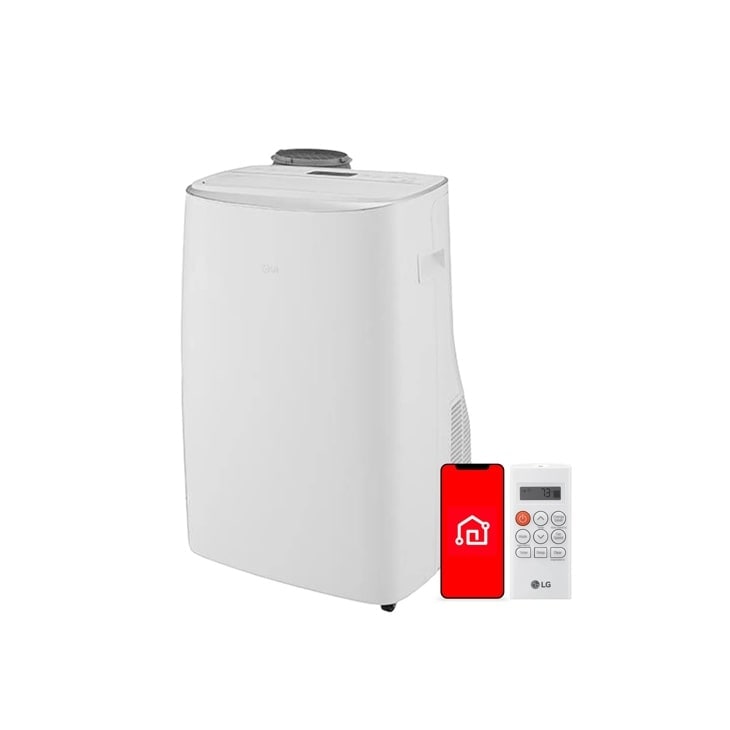
LG Dual Inverter Portable AC (LP1022FVSM)
Zoom
LG

LG Dual Inverter Portable AC (LP1022FVSM)

9.6/10JellyMark Score

The LG LP1022FVSM is the best portable air conditioner here, and it is the one whose numbers survive scrutiny. Its 10,000 BTU SACC is the highest genuine output of the three portables, even though the Whynter's box shouts a bigger number. LG rates the dual inverter at up to 40% more power savings than a standard compressor and quotes 44 dB in sleep mode, and the ThinQ app is genuinely useful. Buy it when a window unit is not an option.

Pros
10,000 BTU SACC, the highest real cooling output of the three portables here
LG rates the dual inverter at up to 40% more power savings than a non-inverter model
LG quotes sound levels as low as 44 dB in sleep mode
Covers up to 450 sq ft, per LG
Wi-Fi through the LG ThinQ app
3-in-1: cool, fan, and dry mode
Cons
The box says 14,000 BTU. That is the old ASHRAE figure. The SACC rating, which is the one that reflects real-world cooling, is 10,000
44 dB is LG's sleep-mode floor, not what it runs at when it is actually cooling
The most expensive of the five
Where to buy
Amazon
Check Price
We may earn a commission from this link.
#2
BEST WINDOW AC
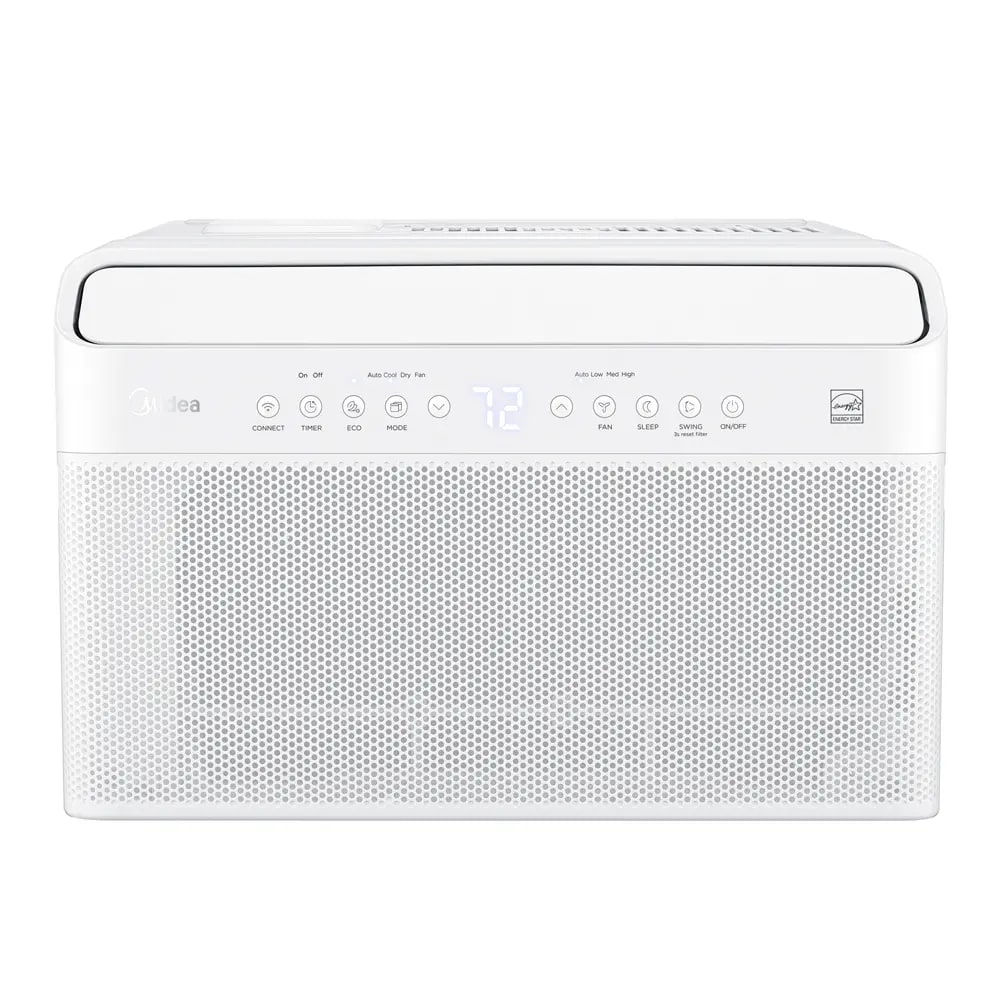
Midea U-Shaped Smart Inverter Window AC (8,000 BTU)
Zoom
Midea

Midea U-Shaped Smart Inverter Window AC (8,000 BTU)

9.4/10JellyMark Score

The Midea U is the best window air conditioner, and the quietest machine on this page by a wide margin: Midea quotes as low as 32 dBA, against 44 dB for the LG and 53 dBA for the Frigidaire. The U-shape is not a gimmick. The window closes through the middle of the unit, which is what blocks the compressor noise outside, and it means you can still open the window. Midea says it was the first window AC to earn ENERGY STAR. Measure your window before you buy: it needs 22 to 36 inches of width.

Pros
Midea quotes operation as low as 32 dBA, the quietest figure any maker on this page publishes
The U-shape lets the window still open, and an anti-theft mechanism locks it when closed
Midea says it was the first window AC to earn ENERGY STAR certification
Over 37% energy savings against a traditional unit, per Midea
8,000 BTU, covering 350 sq ft
Wi-Fi, plus Alexa and Google Assistant
Cons
Your window has to fit it: Midea specifies 22 to 36 inches wide and at least 13.75 inches of height
Single-hung or double-hung windows only
The smallest output here, so it is the wrong pick for a large room
Where to buy
Amazon
Check Price
We may earn a commission from this link.
#3
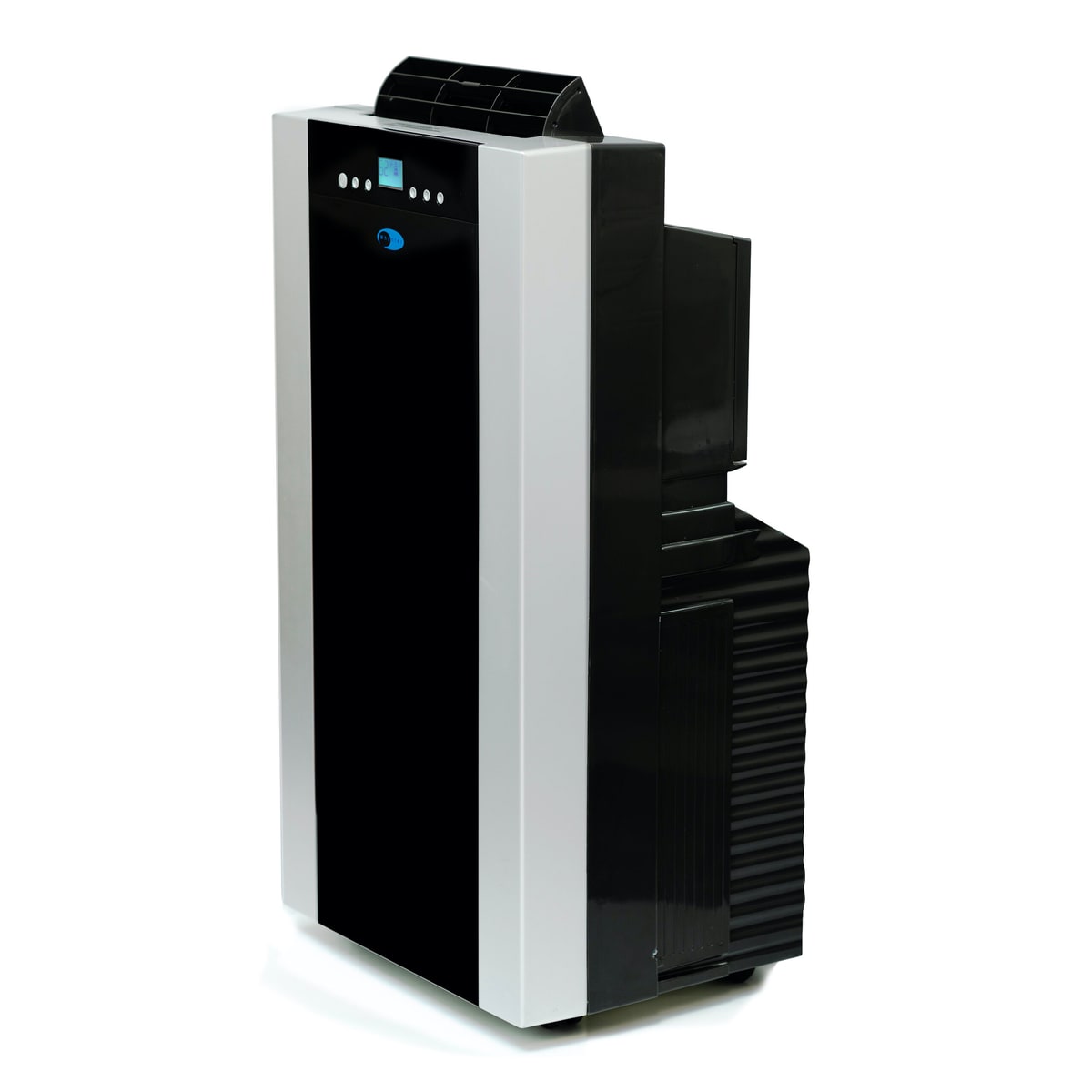
Whynter ARC-14S Portable AC
Zoom
Whynter

Whynter ARC-14S Portable AC

9.2/10JellyMark Score

The Whynter ARC-14S is the only dual-hose unit here, and that is the reason to buy it. A single-hose portable pulls the air it exhausts out of the room you are cooling, which drops the room pressure and drags hot air in from everywhere else. This one takes its exhaust air from outside. Whynter quotes 51 dBA at low speed and 71 pints a day of dehumidifying. Read its own title carefully though: the 14,000 BTU is the ASHRAE number and the SACC is 9,500, which is less real cooling than the LG.

Pros
Dual hose: it draws its exhaust air from outside instead of from the room it is cooling
Whynter quotes 51 dBA at low speed and sells it as a bedroom unit
Whynter rates the dehumidifier at 71 pints a day, with a patented auto-drain
Covers up to 500 sq ft, the largest area claimed here
Good Housekeeping named it Best Overall Portable Air Conditioner in 2025
Thermostat runs 61 to 89°F; CFC-free refrigerant
Cons
The 14,000 BTU on the box is ASHRAE. Whynter puts the SACC figure right in the product title: 9,500. That is less real cooling than the LG
Whynter rates it at up to 1300W, the highest draw of the five
Big: 19 in deep by 16 in wide by 35.5 in tall
Where to buy
Amazon
Check Price
We may earn a commission from this link.
#4
BEST VALUE
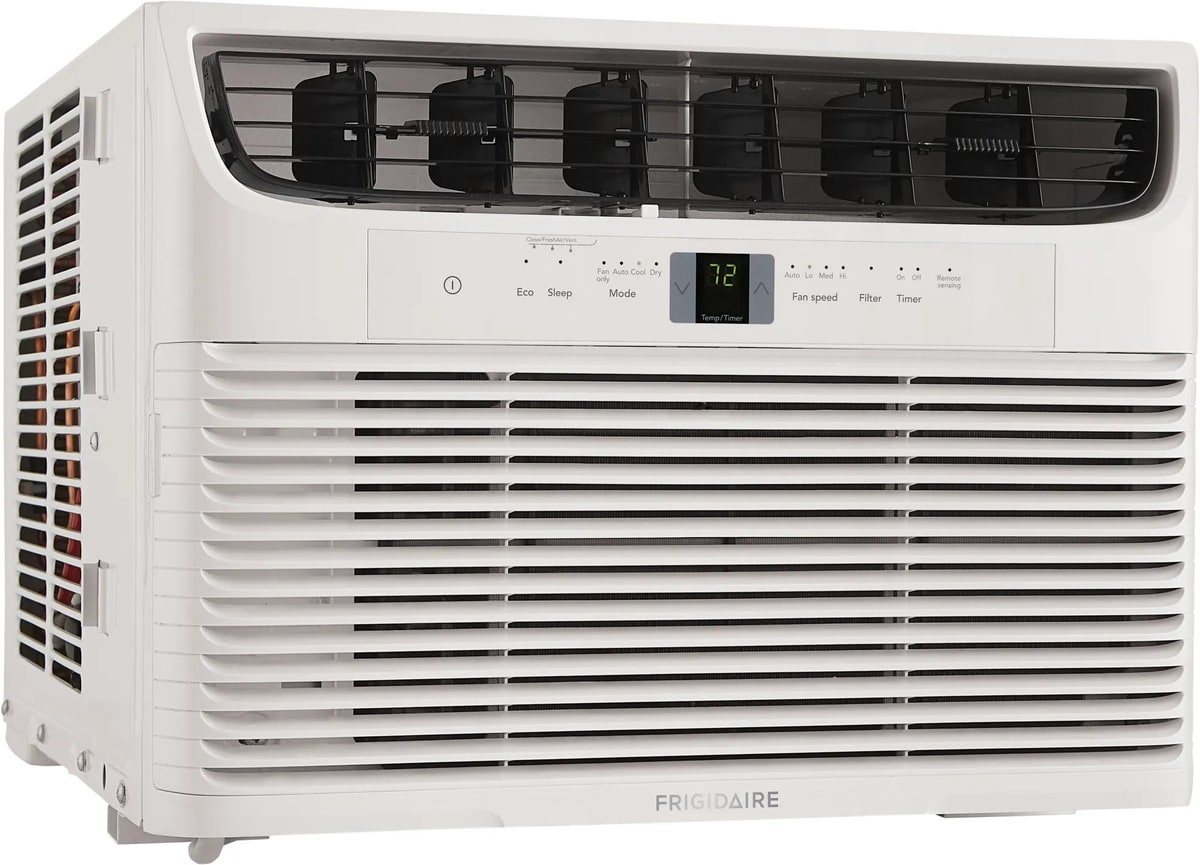
Frigidaire 10,000 BTU Window AC (FHWC103TC1)
Zoom
Frigidaire

Frigidaire 10,000 BTU Window AC (FHWC103TC1)

9/10JellyMark Score

The Frigidaire FHWC103TC1 is the best value on this page: the cheapest of the five, and a straightforward 10,000 BTU across 450 sq ft. Being a window unit, it also sidesteps the whole ASHRAE-versus-SACC problem that makes the portables so hard to compare. Frigidaire quotes 53 dBA and pitches it at living rooms, not bedrooms, which is a fair reading of that number. There is no Wi-Fi and no inverter. If you want cooling and nothing else, this is it.

Pros
10,000 BTU covering up to 450 sq ft, and it is the cheapest unit of the five
A window AC quotes one honest BTU number, with no ASHRAE-versus-SACC gap to decode
Eco Mode, plus a Sleep Mode that walks the temperature up overnight
6-way directional airflow and three fan speeds
Washable dust filter with a Clean Filter alert
24-hour on/off timer, dry mode, remote, auto-restart
Cons
Frigidaire quotes 53 dBA, the loudest published figure here, and it markets it for living rooms rather than bedrooms
No Wi-Fi and no app
A standard compressor, so no inverter efficiency and no inverter quiet
Where to buy
Amazon
Check Price
We may earn a commission from this link.
#5
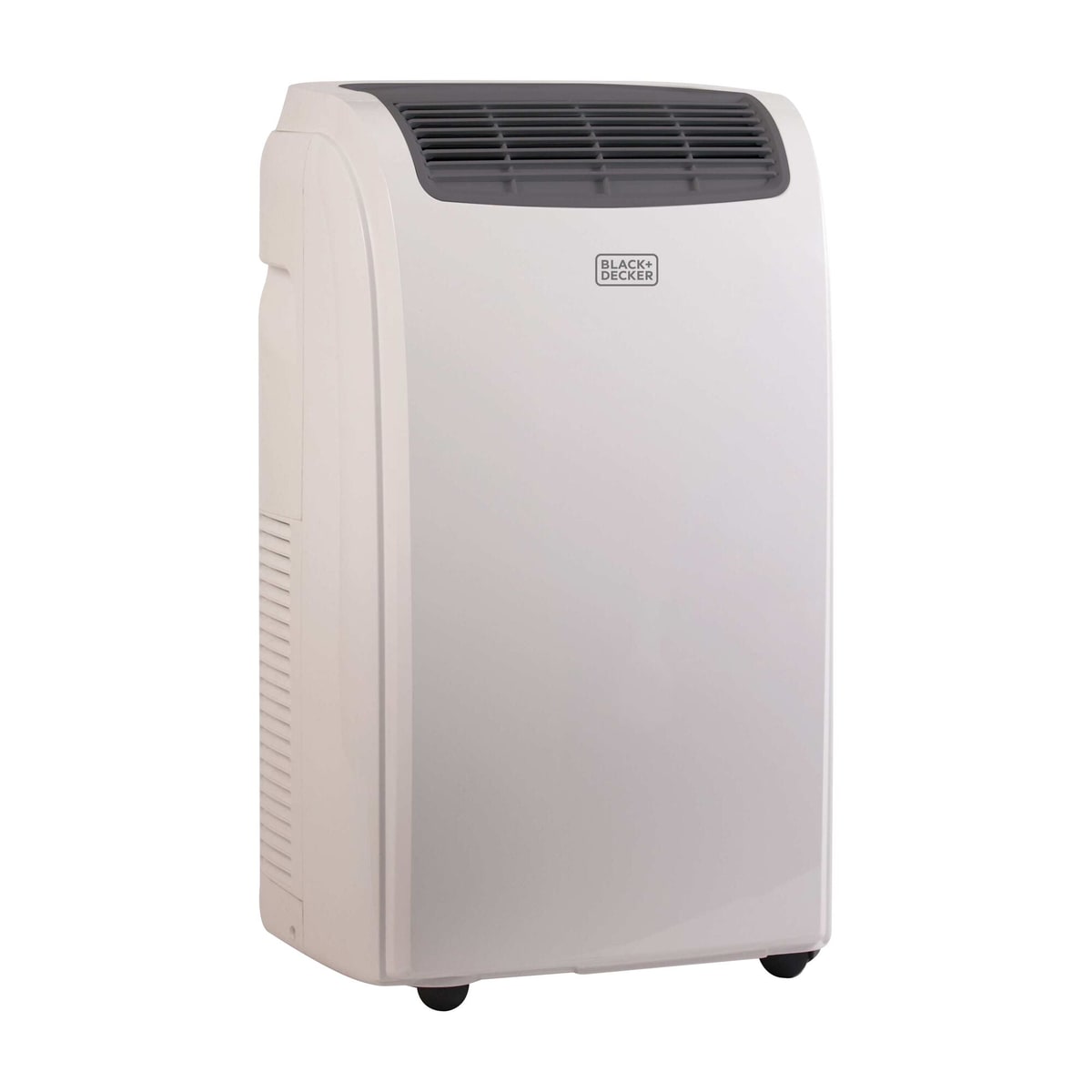
Black+Decker BPACT10WT Portable AC
Zoom
Black+Decker

Black+Decker BPACT10WT Portable AC

8.7/10JellyMark Score

The Black+Decker BPACT10WT is the one to read carefully. Black+Decker sells it as 10,000 BTU, and its own listing puts the DOE figure at 5,550, which is roughly half the real output of the LG that is also sold as a 10,000 BTU class machine. Black+Decker even notes that the marking varies by production batch. It is a single-hose unit and it publishes no noise rating. What you are buying is the Follow Me remote, the casters and the low price. Go in knowing what the number on the box means.

Pros
The Follow Me remote doubles as the thermostat, so it reads the temperature where you are sitting
Casters and side handles on both sides, which is what makes a portable actually portable
Compact for a portable: 15.3 x 14 x 24.8 in
3-in-1: air conditioner, dehumidifier and fan
Window kit included
Cons
Read the DOE number, not the box: Black+Decker publishes 10,000 BTU ASHRAE but only 5,550 DOE, roughly half the LG's real output
Black+Decker says the same unit ships marked 5,550, 5,750 or 6,300 DOE depending on the batch
Black+Decker publishes no noise rating at all for it
Single hose, so it pulls its exhaust air out of the room it is cooling
Where to buy
Amazon
Check Price
We may earn a commission from this link.
§ 02 — Side-by-side comparison

Compare all 5 at a glance

RankProductBrandScoreBest for
#1LG Dual Inverter Portable AC (LP1022FVSM)LG9.6EDITOR'S CHOICE
#2Midea U-Shaped Smart Inverter Window AC (8,000 BTU)Midea9.4BEST WINDOW AC
#3Whynter ARC-14S Portable ACWhynter9.2
#4Frigidaire 10,000 BTU Window AC (FHWC103TC1)Frigidaire9BEST VALUE
#5Black+Decker BPACT10WT Portable ACBlack+Decker8.7
§ 03 — Buying guide

How to choose the right air conditioner

01The BTU on the box of a portable AC is not the BTU that cools your room

Portable air conditioners carry two ratings. ASHRAE is the old one, measured under conditions that flatter the machine, and it is the number that goes on the box in big type. SACC (also written DOE) is the newer standard, and it is the one that reflects a real room. The gap is not small.

All three portables here publish both, and the ordering flips completely. The Whynter shouts 14,000 BTU and states 9,500 SACC in its own product title. The LG shouts 14,000 ASHRAE and states 10,000 SACC. The Black+Decker shouts 10,000 and states 5,550 DOE. So the LG, which looks identical to the Whynter on the box, actually delivers more real cooling than it, and roughly twice what the Black+Decker does.

Window units do not have this problem. The Frigidaire and the Midea quote one number and it is the honest one. When you compare a portable against a window unit, compare SACC against BTU, or you are comparing nothing.

02One hose or two, and why a portable struggles

A portable AC has to dump its heat somewhere, so it blows hot air out of a hose into your window. A single-hose unit takes the air for that hose from the room it is cooling. That lowers the pressure in the room, and the room makes it up by pulling warm air in through every gap, from the hallway, from under the door, from outside.

A dual-hose unit takes its exhaust air from outside instead. The Whynter here is the only dual-hose model of the three portables; the LG and the Black+Decker are single-hose. That is a structural difference, not a tuning one, and it is why a portable will never match a window unit of the same rating.

If a window in the room will take a window unit, fit a window unit. Choose a portable when the window will not take one, or when you are not allowed to fit one.

03Inverter, and the noise figures the makers actually publish

An inverter compressor varies its speed instead of switching on and off. The makers are specific about what that buys: LG says up to 40% more power savings than a non-inverter model, and Midea says over 37% against a traditional unit. Both figures are the manufacturer measuring its own product, so read them as claims, but they are consistent with each other and they are on the record.

On noise, the published figures are Midea 32 dBA, LG 44 dB (in sleep mode, which is the floor and not the operating level), Whynter 51 dBA (at low speed), and Frigidaire 53 dBA. Black+Decker publishes nothing at all. Note how many of those numbers come with a condition attached: a decibel figure without the fan speed it was taken at tells you very little.

§ 04 — FAQ

Questions about air conditioners

Work it out from the wattage the maker publishes rather than from a BTU rating. Whynter rates the ARC-14S at up to 1300W. At full draw that is 1.3 kWh an hour, so eight hours a day at 15 cents a kWh comes to about $1.56 a day. Your own machine will be somewhere under its maximum most of the time, and an inverter model will spend most of its life well under it, which is exactly the saving LG and Midea are describing when they quote 40% and 37%.

Usually, if your window fits. Midea is unusually specific about what it needs, and it is a good example of what to check before you buy anything: a single-hung or double-hung window, 22 to 36 inches wide, with at least 13.75 inches of height, and you install a quick-snap bracket first, set the unit on it, then secure the sidearms. Measure your window before you order. If the unit is going above the ground floor, use the support brackets: a window AC that falls out is a serious accident.

Compare the published figures, and read the small print on each one. On this page: Midea quotes as low as 32 dBA, LG quotes as low as 44 dB but only in sleep mode, Whynter quotes 51 dBA at low speed, and Frigidaire quotes 53 dBA. Black+Decker publishes no figure. Decibels are logarithmic, so the gaps are larger than they look, and the maker will always quote its quietest setting. A number with no fan speed next to it is marketing.

Yes, because cooling air is what makes water condense out of it. Whynter is the only maker here that publishes a figure: it rates the ARC-14S dehumidifier at 71 pints a day, with a patented auto-drain that exhausts the condensate in most conditions so there is no pan to empty. The Black+Decker and the LG both list a dry mode but do not publish a pint rating. If dehumidifying is the actual job, a dedicated dehumidifier does it for less electricity than an air conditioner does.

The verdict

The LG LP1022FVSM is our top pick among the portables, and the reason is the SACC rating: 10,000 BTU of real cooling, more than the Whynter that outguns it on the box. If a window will take a unit, fit a window unit instead, and the Midea U is the one to fit. It is the quietest machine here at 32 dBA, it lets the window still open, and Midea says it was the first window AC to earn ENERGY STAR. On a budget, the Frigidaire does 10,000 BTU over 450 sq ft for the least money of the five. Whatever you buy, size it from the SACC number and not from the number on the box.

This page contains affiliate links. We may earn a commission when you click through and make a purchase — this never affects our rankings.